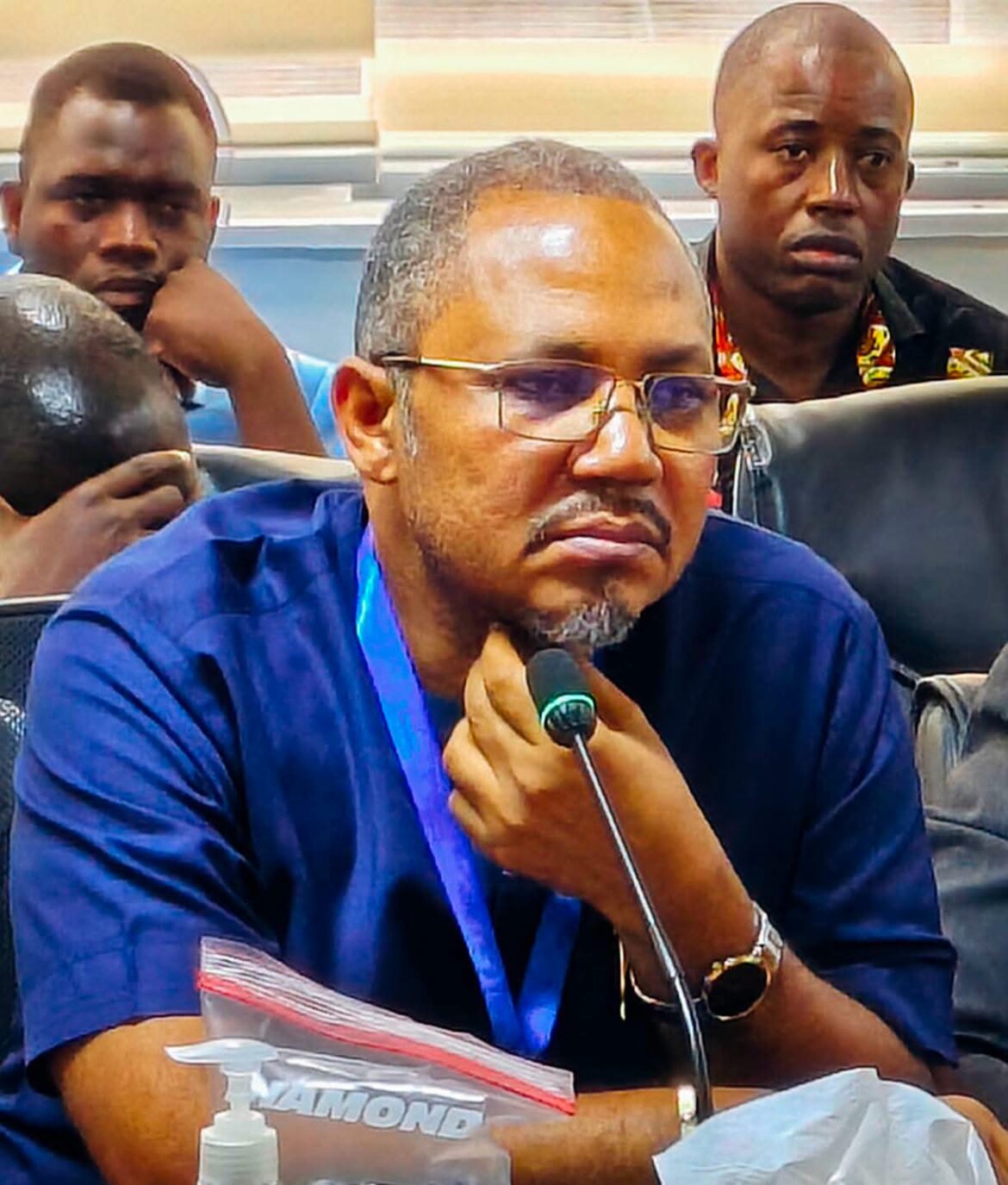
MONROVIA — The Managing Director of the Liberia Water and Sewer Corporation (LWSC), Mohammed Ali, has highlighted a series of achievements and ongoing operational reforms at the Corporation during his appearance before the Executive Budget Hearing.
However, his presentation before the National Budget Committee has also generated scrutiny regarding revenue generation, financial accountability, and whether these reported internal gains are translating into reliable pipe-borne water for ordinary Liberians.
Appearing at the Ministry of Finance and Development Planning on Wednesday, October 7, 2026, Ali outlined what he described as substantial progress since his management team took leadership of the state-owned utility.
Among the cornerstone initiatives presented was the ongoing installation and commissioning of a 48-inch transmission pipeline, designed to replace the system’s aging 36-inch line. According to Ali, the project is engineered to significantly increase transmission capacity and expand pipe-borne water distribution across communities.
The LWSC management also cited the regular payment of employee salaries, internal system upgrades, and administrative reforms as evidence of organizational progress. Yet, questions persist over whether these structural improvements are translating into real-world access for households that continue to rely on alternative water sources.
Addressing rural access, Ali highlighted decentralization projects in regional hubs, including Zwedru, Pleebo, Greenville, Totota, Bopolu, and Compound #3. The expansion aims to extend pipe-borne water infrastructure beyond Montserrado County, where service coverage has historically been concentrated.
To strengthen revenue collection and service delivery, the Corporation announced plans to introduce prepaid water meters. While management maintains the technology will boost collection efficiency and customer accountability, industry analysts note that the system’s success will depend on whether consumers receive consistent, high-quality water supply in exchange for upfront payments.
Compounding operational challenges, the Corporation identified unstable electricity as a primary bottleneck to continuous water production. Ali advocated for the deployment of standalone solar power systems to back up treatment plants and distribution stations, arguing that resilient energy generation is vital to maintaining uninterrupted service nationwide.
Despite these reported milestones, public focus remains firmly on LWSC’s financial standing and its direct contributions to the state. Concerns persist regarding revenue collected from high-volume commercial consumers—including hotels, manufacturing plants, and large businesses—and the extent to which these funds are accurately reflected in the National Budget or reinvested into expanding the public network.
This dynamic underscores broader policy questions concerning state-owned enterprises: As LWSC increases its collections, what proportion of revenue is retained internally, how much is remitted to the national treasury, and what share is directed toward capital infrastructure?
For everyday citizens, however, the ultimate metric of performance remains household access. Speaking with journalists in Monrovia, Central Monrovia resident Justina Machado observed that many families still rely on purchasing and hauling water in yellow jerrycans for their basic daily needs, despite official reports of corporate progress.
This disconnect between high-level infrastructure updates and the daily reality of water access highlights the need for clear disclosures regarding LWSC’s earnings, capital expenditures, active customer connections, and actual supply hours.
While the 48-inch pipeline, regional expansion, smart metering, and proposed renewable energy installations represent positive steps toward sector reform, the public will measure success by the availability of affordable, safe, and dependable running water in their homes.
Ultimately, the budget hearings place LWSC under sustained pressure to demonstrate not only its administrative milestones, but also how its financial resources are being managed and converted into tangible improvements for the Liberian people.
See more Liberia News Network stories in Google Search by adding LNN as one of your Preferred Sources.
★ Add LNN as a Preferred Source