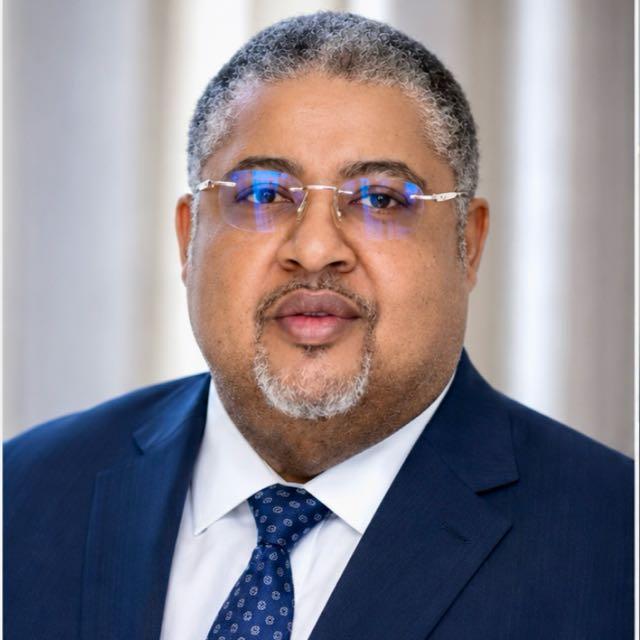
MONROVIA – Former Commerce Minister Amin Modad’s response to Liberia’s US$1 billion milestone shifts attention from collection figures toward choices that determine their value. He argues that the achievement deserves recognition because the government established a target, planned for it, and delivered. Yet celebration cannot answer citizens asking how revenue will improve their lives. Modad identifies youth development, healthcare, education, infrastructure, entrepreneurship, production, and affordable business financing as priorities. He warns that resources and institutional capacity require disciplined choices rather than scattered spending. His position joins accountability with opportunity. He contends government should receive room to deliver while society tracks expenditures, demands transparency, and measures results. As THE ANALYST reports, fiscal progress, he argues, must produce jobs, incomes, stronger services, and economic security.
Former Commerce Minister Amin Modad has urged the government to convert Liberia’s US$1 billion revenue milestone into investments that improve healthcare, education, infrastructure, youth development and opportunities for Liberian-owned businesses.
Modad described the achievement as significant but warned that increased revenue would have little meaning if it did not improve citizens’ lives. He called for disciplined spending, stronger public accountability and deliberate investments capable of sustaining economic growth.
“The government generated $1B—So What? I understand why many ordinary Liberians remain skeptical and ask: ‘How does this benefit me?’” Modad stated. He attributed the skepticism to political narratives, years of unfulfilled promises and governments that collected revenue without transforming people’s lives.
Modad cautioned against both uncritical celebration and the automatic rejection of the achievement. “We must therefore move beyond both blind celebration and automatic cynicism. Give the administration the opportunity to prove itself, but strengthen public accountability at every step,” he declared.
Milestone Deserves Measured Recognition
The former minister argued that the government deserved recognition for establishing the billion-dollar target and achieving it. He maintained that the accomplishment demonstrated what proper planning, commitment and implementation could produce.
“Yes, $1B is a significant step, not so much of the amount, but the fact that the government aspired, committed, planned, and achieved,” Modad stated. “I believe that with the right policies, reforms, strategy, and reinvestment we should easily be able to achieve twice this amount.”
According to Modad, the central value of increased domestic revenue is the additional fiscal space it provides the government. He noted that strategic investment could produce better healthcare and education, stronger infrastructure, improved public services, greater youth development and productive economic opportunities.
Modad nevertheless warned that Liberia’s numerous development needs could not be addressed simultaneously. “However, we must be discipline and understand that though Liberia has too many needs, we cannot do everything at once,” he stated.
He identified policies, reforms and institutions that make economic growth and revenue generation sustainable as the government’s first priority. He argued that limited resources and institutional capacity required the administration to make deliberate choices instead of spreading funds thinly across competing demands.
Modad recalled that one of the challenges during President Ellen Johnson Sirleaf’s first term was the enormous scale of the problems inherited after the civil war. He noted that understandable pressure to address those problems simultaneously stretched limited resources and institutional capacity across several competing priorities.
Youth Investment Cannot Wait
The former minister identified Liberia’s youthful population as the country’s greatest national asset. He warned that youth development could not remain secondary when approximately 68 percent of the population comprised young people.
“This is particularly important because Liberia’s greatest asset is its young and vibrant population,” Modad stated. “With roughly 68% of our population being young, youth development cannot remain an afterthought.”
He called for deliberate investments in healthcare, quality education, vocational and technical training, digital skills, entrepreneurship and apprenticeships. He also urged the government to expand opportunities that would prepare young Liberians to become productive workers, innovators, entrepreneurs and business owners.
“We must deliberately invest in building a healthy, educated, skilled, and capable generation of young Liberians,” Modad declared. He maintained that such investments were essential to Liberia’s long-term economic growth and national stability.
Liberian Businesses Need Capital
Modad also urged the government to empower Liberian entrepreneurs to take greater ownership of the national economy. He argued that the government alone could not create enough sustainable employment for the country’s growing workforce.
“Government cannot create enough sustainable jobs by itself,” he stated. “We need a private sector in which Liberians can start, finance, grow and scale businesses.”
Modad linked the need for business financing to the recent national discussion concerning nonperforming loans. He stated that the debate had properly placed access to finance and support for micro, small and medium-sized enterprises at the center of financial-sector reform.
According to him, Liberian businesses require more than short-term commercial loans. He called for patient and affordable capital that would give enterprises enough time to become established, invest, produce and earn profits.
“For Liberian businesses to thrive, they require access to capital—not simply short-term loans, but patient, affordable capital that affords them sufficient time to establish themselves, invest, produce and become profitable,” Modad stated.
He observed that many Liberian businesses struggled under high interest rates, short repayment periods, collateral requirements and restrictive lending conditions. He argued that potentially productive enterprises should not be allowed to collapse when responsible refinancing and loan restructuring could restore them.
“Where viable businesses have been pushed into distress because of expensive financing or difficult economic conditions, there should be mechanisms for responsible refinancing and restructuring of bad loans,” Modad noted.
Strategy Must Promote Production
Modad called for an economic strategy that protects essential social services, develops young people and strengthens Liberian participation in the economy. He also advocated increased domestic production, value addition and exports.
“Our economic strategy should therefore be clear: protect basic social services; develop our youth; produce more of what we currently import; add value to our natural resources and comparative advantages; increase exports; and build a Liberian-owned private sector,” Modad declared.
He argued that this approach would allow increased government revenue to produce higher household incomes, jobs and economic security. He maintained that revenue growth should ultimately strengthen both public services and private economic activity.
Declining Aid Requires Self-Reliance
The former minister also warned that Liberia could no longer base its future on the assumption that foreign assistance would always remain available. He cited declining aid, shifting geopolitical priorities and growing fragmentation within the international system.
“Foreign aid is declining significantly, geopolitical priorities are shifting, multilateralism is suffocating due geopolitical fragmentation, and countries like ours can no longer build their future on the assumption that external assistance will always be available,” Modad stated.
He argued that Liberia must increasingly finance its development through domestic resources. The country must also build an economy in which Liberians have a direct interest in their collective survival and prosperity, he maintained.
Modad urged citizens to recognize genuine progress even when they disagreed politically with the administration. However, he strongly rejected any suggestion that the government should receive unrestricted approval.
“So, let us put aside the instinct to dismiss every positive development because of politics,” Modad stated. “Celebrate progress where progress is made and give the government room to work.”
“Don’t get me wrong…I’m not saying give the administration a free pass!” he emphasized. Modad recalled that President Joseph Nyuma Boakai had repeatedly stressed the importance of accountability.
He called on civil society to ask difficult questions, demand transparency and track how the increased revenue is spent. He also urged citizens to insist upon measurable results and hold public officials accountable.
“Skepticism is healthy when it demands accountability,” Modad declared. “It becomes destructive when it refuses to recognize progress simply because of who is in power.”
See more Liberia News Network stories in Google Search by adding LNN as one of your Preferred Sources.
★ Add LNN as a Preferred Source