
Liberia has not reported any suspected Ebola cases since the World Health Organization (WHO) and the Africa Centers for Disease Control (Africa CDC) declared the virus a public health emergency in Uganda and the Democratic Republic of Congo in May.
The Bundibugyo strain of the Ebola virus has triggered a fast‑moving epidemic across two countries. With no licensed vaccine available for treatment or rapid diagnosis, Liberia and other West African countries have remained on high alert.
The National Public Health Institute of Liberia (NPHIL) led a nationwide assessment across all fifteen counties to evaluate surveillance systems, points of entry, emergency operations centers, laboratories, and isolation facilities to gauge preparedness should Ebola enter Liberia.
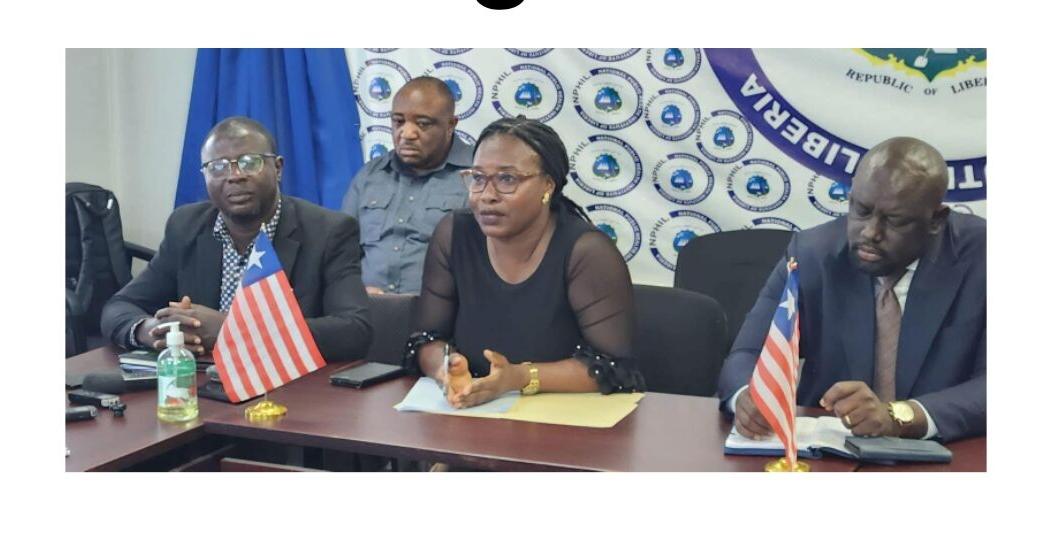
“Because Ebola can cross borders through human movement, we paid particular attention to Liberia’s land borders, airports, and seaports,” said Dr. Sia Wata Camanor, NPHIL’s Interim Director General, at a press conference.
“Our surveillance systems remain functional. We have trained cadre of workforce at all levels of the health system, including 98 DSOs, 17 CSOs, and 22 ZSOs. These surveillance officers remain vigilant and actively conducting case search and reporting.”
According to Dr. Camanor, nine land borders, four seaports, and two airports were assessed. Nine hundred and eighty-seven asymptomatic travelers have been screened, the majority returning from the Hajj in Saudi Arabia. Of these, 966 (98%) have completed 21 days of monitoring, while 21 (2%) remain under active follow-up. “None are showing symptoms of Ebola,” she said.
Despite these strides, Dr. Camanor highlighted challenges: several border facilities require upgrades, including improved screening infrastructure, holding areas for symptomatic travelers, functional ambulances, communication equipment, and infection prevention supplies. She also noted human resource gaps, with limited staff and reliance on volunteers at many entry points.
In May, sixteen travelers arriving in Liberia from Congo and Uganda—including three Liberians—were placed under surveillance. According to NPHIL’s interim director general, these 16 individuals are part of the 987 travelers screened, of whom only 21 remain under active monitoring.
A total of 1,481 cases have been reported since the outbreak was announced. One thousand four hundred and sixty have been reported in the DRC, 20 in Uganda, and one in France linked to the DRC. The outbreak has resulted in 454 deaths, including two in Uganda. Meanwhile, at least 229 patients have recovered: 213 in the DRC and 16 in Uganda.
NPHIL expressed appreciation for the collaboration between Liberia and neighboring countries in strengthening cross-border surveillance and information sharing. Joint security officers stationed at official and unofficial entry points have played a critical role in liaising with county health teams when symptomatic travelers are detected.
Acknowledgment was also given to the World Bank for its commitment to funding assessments, constructing triage centers at designated entry points, and supporting capacity-building training for port health officers and joint security personnel.
NPHIL reaffirmed that Liberia has not recorded any confirmed cases of the disease.
Meanwhile, Liberia’s health minister, Dr. Louis Mapleh Kpoto, announced that a US$4.2 million budget has been proposed for Ebola preparedness and control.
