
By Socrates Smythe Saywon | Smart News Liberia
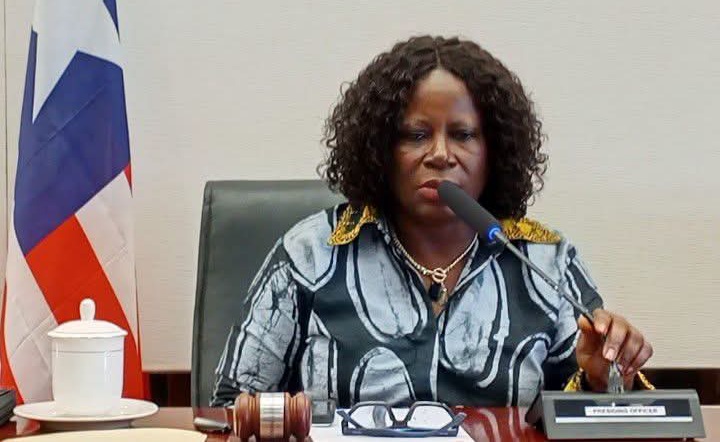
MONROVIA, LIBERIA – A fresh controversy has erupted around the leadership of the Liberian Senate after exiled Liberian activist Martin K. N. Kollie accused Senate Pro Tempore Nyonblee Karnga-Lawrence of violating anti-corruption and conflict-of-interest laws by allegedly receiving a US$15,000 contribution from the Senate for her private charity, the Nyonblee Cares Foundation.
In an open letter dated Wednesday, July 8, 2026, Kollie described the reported contribution as an abuse of public office, arguing that the Senate leader should not preside over a legislative body while allegedly benefiting financially through a private foundation she founded.
“Madam Pro Temp, this is wrong, and you know it is,” Kollie wrote. “Taking public money and donating it to yourself is political corruption.”
The activist alleged that the contribution violated Liberia’s 2014 Code of Conduct and the amended Anti-Corruption Act, claiming the transaction constituted a conflict of interest and an improper use of public office for private benefit.
Kollie further recalled a similar controversy in 2024, when the Senate reportedly contributed US$10,000 to the Worldwide Mission Church in Grand Bassa County, a church associated with the Pro Tempore’s father, arguing that the latest contribution reflects a recurring pattern requiring greater public scrutiny.
Beyond the legal allegations, Kollie questioned the morality of the contribution amid Liberia’s worsening economic challenges.
He noted that the Senate has appropriated more than US$4.18 million for the Office of the Senate Pro Tempore between fiscal years 2024 and 2026, broken down as:
FY2024: US$1,406,927
FY2025: US$1,222,731
FY2026: US$1,558,926
Total: US$4,188,584
According to Kollie, allocating an additional US$15,000 to the Pro Tempore’s foundation raises serious ethical questions while thousands of Liberians struggle with unemployment, low public-sector wages, deteriorating infrastructure, and inadequate public services.
He argued that the money could instead have supported the damaged Payneberry Bridge in Grand Bassa, strengthened public health and education institutions, or assisted vulnerable youth and underpaid civil servants.
Kollie concluded his letter by urging Karnga-Lawrence to return the money and copied both the Liberia Anti-Corruption Commission and the Office of the Ombudsman.
Hours after Kollie’s letter circulated publicly, the Senate Public Affairs Department issued a clarification rejecting the central allegation that public funds had been donated.
According to the Senate, the US$15,000 announced during a fundraising program for the Nyonblee Cares Foundation in Buchanan, Grand Bassa County, did not originate from the Senate’s public budget.
Instead, the Senate stated that the amount represented a collective contribution made by individual senators who attended the July 3 fundraising event.
The clarification explained that Albert T. Chie publicly announced the US$15,000 contribution on behalf of senators attending the event and separately pledged an additional US$5,000 from his own resources, describing it as recognition of the humanitarian work carried out by the foundation.
The Senate further disclosed that senators present at the event reached a consensus to make the contribution and praised the foundation’s charitable activities in Grand Bassa and other parts of Liberia.
The Senate also announced that, following the Buchanan fundraising program, all 29 senators agreed to contribute US$500 each to the foundation.
Pro Tempore Nyonblee Karnga-Lawrence reportedly accepted the contributions and expressed gratitude to her colleagues, supporters, and President Joseph Nyuma Boakai for supporting the foundation’s humanitarian mission.
While the Senate insists no public funds were used, Kollie’s criticism raises a governance issue that extends beyond the source of the money.
The controversy now centers on whether elected officials should collectively finance a charitable organization founded by their presiding officer, even if the contributions come from their personal resources rather than the national treasury.
However, judging from comments on social media, particularly Facebook, some critics of the Pro Tempore argue that such arrangements create perceptions of favoritism, conflict of interest, or undue influence. Supporters, however, maintain that legislators, like any private citizens, are free to support charitable causes of their choosing.
With Kollie calling for scrutiny by Liberia’s anti-corruption institutions and the Senate maintaining that the contributions were entirely voluntary and personal, the debate has shifted from a question of public expenditure to one of public ethics and accountability.
