
By Contributing Writer
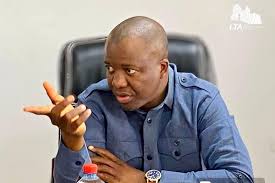
MONROVIA, May 27, 2026 — Allegations regarding the political ambitions of Liberia Telecommunications Authority (LTA) Chairperson Clarence Massaquoi are reigniting debate over the fragile boundaries between politics, regulatory authority, and private sector influence in Liberia.
Massaquoi, a former two-term Representative of Lofa County District #3, is reportedly considering a return to national politics. Speculation suggests he may seek a legislative seat and potentially the Speakership of the House of Representatives.
Although Massaquoi has made no official declaration, reports have sparked concern among governance observers and stakeholders in Liberia’s telecommunications sector. Many question whether active political maneuvering is compatible with leading a major regulatory institution.
These concerns are heightened by ongoing developments in the telecommunications industry, particularly the transition from Telecom International Alliance (TIA) to a new operator, NumTel JV Numbase LLC. Unverified claims allege Massaquoi is seeking financial or political support from interests linked to the sector.
While none of the allegations have been independently confirmed, analysts warn that even the perception of overlapping political and regulatory interests could erode public confidence in the LTA’s neutrality.
The LTA, Liberia’s chief telecommunications regulator, oversees industry operators, ensures fair competition, protects consumers, and maintains transparency in one of the country’s most vital economic sectors. Critics argue that any suggestion of political involvement by its leadership threatens the institution’s independence.
Observers note that Liberia has long struggled with political interference in public institutions, especially those regulating lucrative sectors. The reports on Massaquoi, they say, underscore persistent worries about the blurred lines between politics, business, and state regulation.
At the core of the debate is the contradiction between the impartiality expected of a regulator and the inherently political nature of a campaign for legislative leadership. The Speakership is one of Liberia’s most powerful and fiercely contested positions, demanding coalition-building, lobbying, and partisan negotiation.
Governance advocates argue that while political ambitions are constitutionally protected, pursuing them while holding an impartial oversight role in a billion-dollar industry raises ethical concerns.
“The issue is not necessarily whether a public official has political ambitions,” one governance analyst noted. “The concern is whether those ambitions create circumstances that compromise institutional trust or create the appearance of conflict of interest.”
Alleged links to TIA and NumTel negotiations have intensified scrutiny. Industry observers caution that even perceived political interference in regulatory decisions can undermine investor confidence—especially as Liberia seeks to attract foreign investment and modernize its digital infrastructure.
Some critics within the telecommunications sector contend that Liberia’s governance framework still suffers from a weak separation between public office and private interests. They argue that regulators often move between political activity, business relationships, and public authority, complicating accountability.
Supporters of Massaquoi may counter that political participation is a constitutional right and that there is no evidence of wrongdoing or improper conduct. Nonetheless, critics insist that public trust in regulatory institutions hinges not only on actual integrity but also on the perception of independence and neutrality.
Massaquoi has yet to publicly address the reports about his political ambitions or the allegations linking him to telecom-related negotiations. His silence continues to fuel speculation in both political and business circles.
Political analysts say the controversy goes beyond one individual and highlights a deeper structural challenge in Liberia’s governance system—where the boundaries between public service, political ambition, and commercial interests often overlap.
As Liberia seeks to strengthen regulatory institutions and improve its investment climate, experts argue that greater transparency and clearer ethical boundaries are essential for maintaining public trust and ensuring that institutions like the LTA are seen as independent regulators, not political actors.
