
By Kruah Thompson
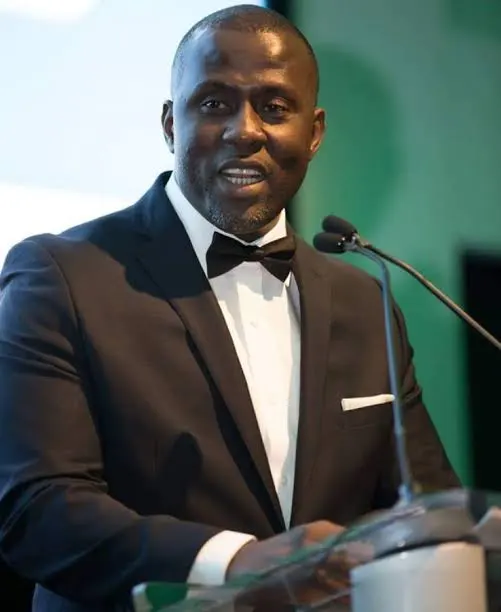
BUCHANAN, Grand Bassa County, July 6, 2026 – The Managing Director of Africa Development Management Associates, B. Elias Shoniyin, has blamed persistent poverty in Grand Bassa County’s rural communities on decades of poor governance, neglect and the failure of journalists to hold public officials accountable.
Delivering the keynote address at the first Grand Bassa Media Conference, Shoniyin said the county’s poverty was “not accidental,” but the result of governance failures and the silence of those who witnessed wrongdoing.
“The silence of those who saw wrong and said nothing. The silence of those who had the pen in their hands and chose not to use it,” he said.
The conference was organized by the Grand Bassa County Chapter of the Press Union of Liberia under the theme, “Strengthening Community Media for Development, Accountability, and National Progress.”
Shoniyin urged journalists to use their platforms to scrutinize public officials and expose wrongdoing, warning that a society without an effective press cannot fully understand or confront its problems.
“A county without a functioning press is a county without a mirror. Without you, Grand Bassa will never see itself clearly to know that there is an urgent need for change,” he told participants.
To illustrate the role of investigative journalism, Shoniyin recounted a story about an elderly town chief, identified as Pa Tamba, from a village near Buchanan.
According to him, the chief repeatedly claimed to be accountable and transparent until a young journalist questioned him about a government-funded bridge that had never been built.
Shoniyin said the chief initially claimed the money had not been received, but the journalist produced documents showing that the funds had arrived two years earlier. The records reportedly included a payment voucher, an official letter and the chief’s signature.
Faced with the evidence, Shoniyin said the chief responded: “My daughter … you should have been a lawyer.”
He said the story demonstrated the power of evidence-based journalism to expose wrongdoing and deter future abuses.
“That young journalist did not stop a crime that day; she prevented a generation of crimes from happening in silence,” he said.
Shoniyin also cited Liberia’s improved ranking on the 2026 World Press Freedom Index, saying the country moved from 75th in 2022 to 58th out of 180 countries in 2026.
He said the improvement reflects better political conditions for journalism but warned that greater press freedom comes with greater responsibility.
“The press is democracy’s immune system. When the immune system is weak, corruption spreads, incompetence spreads, and injustice spreads,” Shoniyin said.
He urged journalists to remain diligent, courageous and principled in exposing corruption, incompetence and abuse of power.
Quoting American jurist Hugo Black, Shoniyin said, “The press was to serve the governed, not the governors,” stressing that journalists’ primary responsibility is to ordinary citizens rather than public officials.
He said journalists must give greater attention to the concerns of children, farmers, market women, students and pregnant women struggling to access basic services.
Shoniyin concluded that Grand Bassa’s development depends in part on a free, active, and responsible media capable of informing citizens and holding leaders accountable.
