By Edwin N. Khakie
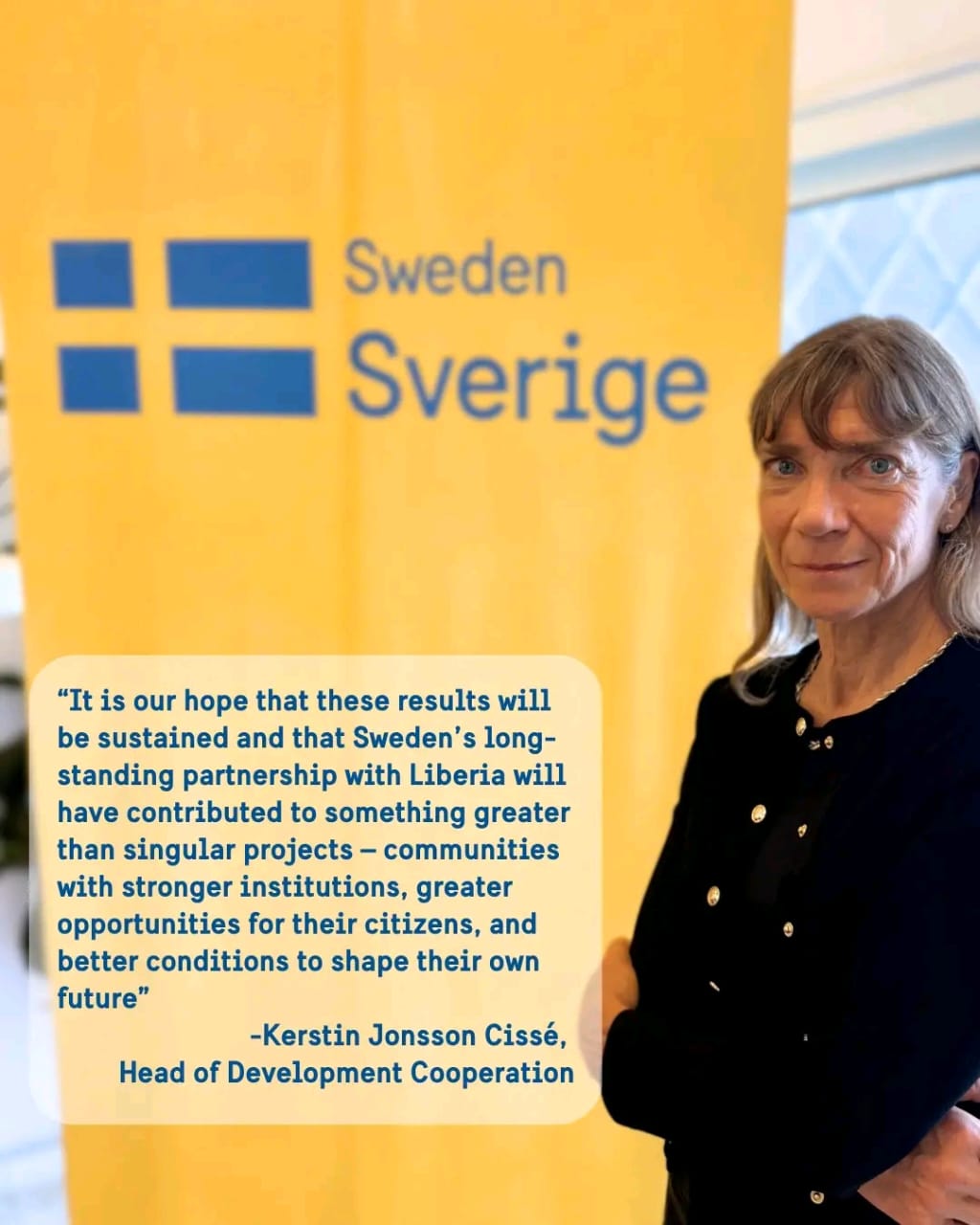
MONROVIA, Liberia, August 14, 2026 — Sweden’s nearly 18-year bilateral development cooperation with Liberia will officially end on August 31, 2026, leaving the Liberian government with the challenge of sustaining programs supported by the European nation since the country’s post-war recovery.
Since 2008, Swedish assistance has supported programs covering democratic governance, land rights, gender equality, education, healthcare, infrastructure, natural resource management, institutional strengthening and private-sector development.
While Sweden is expected to continue supporting Liberia through the European Union, multilateral institutions and civil society partnerships, the end of direct bilateral development cooperation raises questions about the sustainability of programs that have depended on Swedish funding.
Sweden began its development engagement with Liberia during the country’s post-war recovery, when years of civil conflict had severely damaged infrastructure, weakened public institutions and left many communities without adequate access to basic services.
Over the years, the partnership evolved from supporting post-conflict recovery to strengthening democratic institutions, accountability and citizens’ rights.
Swedish assistance has supported Liberia’s electoral and democratic processes as well as initiatives intended to strengthen governance and public accountability.
Land rights and natural resource management have also featured prominently in the partnership, with programs aimed at helping communities secure their land rights and promoting sustainable management of natural resources.
Another major component of Swedish support has focused on women’s rights and gender equality.
Swedish-backed initiatives have supported efforts to expand opportunities for women and girls and address harmful practices, including female genital mutilation.
With direct bilateral assistance ending, sustaining progress in these areas will require increased government funding, continued institutional commitment and support from other development partners.
Swedish assistance has also extended to education, healthcare and infrastructure, including projects intended to improve access to communities and essential public services.
The termination of bilateral cooperation does not necessarily mean that all Swedish-supported programs will immediately end. However, programs without alternative financing or transition arrangements could face implementation and funding challenges.
The transition could be particularly significant for land governance and natural resource management, areas in which Liberia continues to face disputes over ownership, community rights and the management of natural resources.
Sweden has also supported private-sector development and initiatives aimed at improving the business environment and expanding economic opportunities.
As the bilateral partnership closes, attention is expected to shift toward the Liberian government’s ability to assume greater financial and institutional responsibility for development programs previously supported through Swedish assistance.
The government will also face the challenge of attracting alternative financing from other bilateral and multilateral partners while incorporating successful donor-supported initiatives into national budgets and programs.
Sweden’s continued engagement through the European Union, multilateral organizations and civil society means its development relationship with Liberia will not end entirely after August 31.
However, the conclusion of nearly 18 years of direct bilateral development cooperation marks a significant shift in relations between the two countries and places greater responsibility on Liberia to preserve gains made under the partnership.
See more Liberia News Network stories in Google Search by adding LNN as one of your Preferred Sources.
★ Add LNN as a Preferred Source