By Stephen G. Fellajuah
MONROVIA, Liberia, August 27, 2026 — Justice Minister and Attorney General Cllr. N. Oswald Tweh has vowed to intensify Liberia’s crackdown on drug trafficking.
He declared that no individual implicated by credible evidence will be protected because of wealth, influence, friendship or political connections.
Tweh said the government is drawing a firm line against drug cartels and their collaborators, but stressed that investigations and prosecutions must be guided by evidence, due process and the rule of law.
“Our sleeves are rolled up, and the battle line between the drug cartels and the Liberian State has been clearly drawn,” Tweh declared.
The Attorney General spoke Wednesday during the relaunch of the Press Union of Liberia’s Edward Wilmot Blyden Intellectual Discourse at the union’s headquarters on Warner Avenue in Sinkor, Monrovia.
The forum was held under the theme, “Confronting Drug Trafficking: Strengthening Institutions, Advancing Accountability, and Safeguarding the Rule of Law.”
Tweh pointed to recent major narcotics seizures as evidence of what he described as increased coordination and political commitment in the government’s fight against illicit drugs.
According to him, the Liberia Drug Enforcement Agency seized more than 400 kilograms of illegal narcotics and arrested more than 200 suspects during the first quarter of the year.
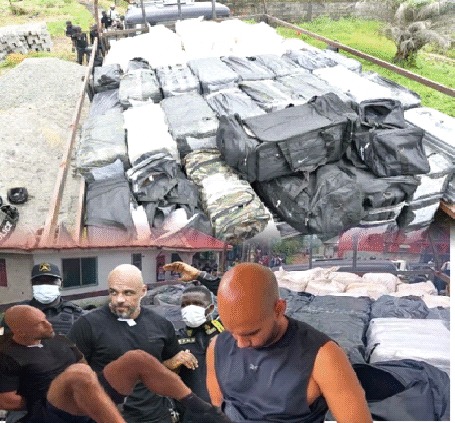
He also cited the June interception of approximately 237 kilograms of cocaine at Roberts International Airport and the subsequent seizure of nearly four metric tons of cocaine in Duazon, which he described as the largest narcotics seizure in Liberia’s history.
More than US$336 million worth of cocaine from the two major seizures was publicly destroyed in Margibi County at the end of July.
Tweh credited the Liberia Drug Enforcement Agency, Liberia National Police, Ministry of Justice, prosecutors, investigators and other national security institutions for the recent enforcement operations.
But the Justice Minister said major seizures alone are not enough, arguing that authorities must pursue the networks, financiers and facilitators behind the illicit drug trade.
He warned against limiting prosecutions to couriers, drivers and low-level dealers while financiers, facilitators and influential individuals potentially connected to trafficking networks escape scrutiny.
“As Minister of Justice, I assure you that no one will be protected because of influence, friendship, wealth, or political connections,” Tweh said.
He maintained that anyone implicated by credible evidence, whether a customs officer, security official, businessman, politician or private citizen, must face the law.
At the same time, Tweh cautioned against convicting people in the court of public opinion based on accusations, social media claims or political pressure.
He said the government cannot fight lawlessness by abandoning the principles of law and due process.
According to him, the government’s responsibility is to ensure that seizures lead to investigations, investigations produce credible evidence, and that evidence is properly presented before the courts.
The Attorney General also pushed back against critics who, he said, view the government’s anti-drug campaign exclusively through a political lens.
While acknowledging the public’s right to criticize the government, Tweh argued that political disagreements should not overshadow concrete enforcement actions, including seizures, arrests, investigations and prosecutions.
He nevertheless acknowledged that the scale of recent cocaine seizures has exposed weaknesses in Liberia’s security and enforcement systems that require attention.
Tweh called for stronger screening and intelligence systems, greater coordination among security agencies and investigations into possible corruption or facilitation within institutions.
He also urged authorities to shift greater attention toward dismantling entire trafficking networks instead of merely intercepting individual drug shipments.
Under the government’s enforcement framework, Tweh said, the Liberia Drug Enforcement Agency will continue to lead narcotics interdiction efforts, while the Liberia National Police and other security institutions support investigations and public safety operations.
The Ministry of Justice, he added, will guide prosecutions and ensure that cases are handled through the courts in accordance with law.
Tweh described respect for the rule of law as critical to the anti-drug campaign, saying it provides the government with the authority to investigate and prosecute suspects while also protecting citizens, journalists and accused persons from arbitrary action.
He warned that weakening due process in the name of combating narcotics could undermine the very institutions the government is seeking to strengthen.
The Justice Minister said Liberia’s battle must therefore extend beyond the drugs themselves to confronting corruption, institutional weaknesses, indifference and what he described as the deliberate distortion of facts for political advantage.
See more Liberia News Network stories in Google Search by adding LNN as one of your Preferred Sources.
★ Add LNN as a Preferred Source