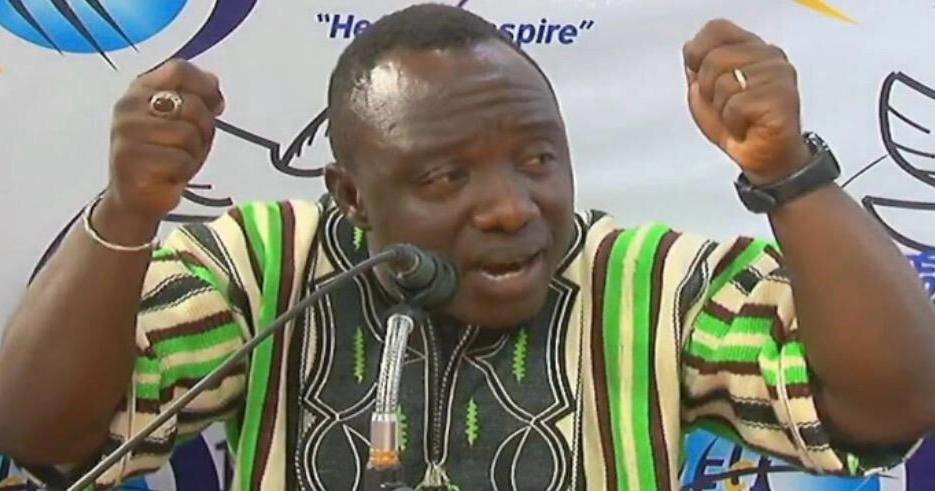
The ruling Unity Party has handed Senator Prince Kermue Moye a politically sensitive assignment: overseeing and conducting the party’s regional leadership elections in Lofa County.
The appointment places the Bong County senator at the centre of an internal electoral process that the Unity Party says must be credible, transparent, impartial and capable of producing a legitimate and united regional leadership.
It also gives Mr Moye a test that extends beyond the mechanics of counting ballots.
His performance could become a measure of how seriously the Unity Party takes internal democracy, particularly at a time when political parties in Liberia are under pressure to demonstrate that the democratic principles they promote nationally are also respected within their own organisations.
In a letter dated 10 August 2026, Unity Party National Chairman Dr J. Luther Tarpeh formally appointed Senator Moye as chairperson of the committee responsible for the Lofa regional leadership elections.
The elections are scheduled to take place between 20 and 30 August, according to the appointment letter.
Dr Tarpeh said the senator’s selection was based on what the party described as his leadership, integrity and commitment to democratic ideals.
But the mandate comes with strict responsibilities.
The committee has been instructed to maintain complete neutrality, treat candidates equally, comply with the Unity Party constitution and applicable electoral laws, manage voting materials securely and ensure accessible polling venues.
It must also verify and publish the list of eligible voters and delegates, establish a mechanism for resolving complaints, monitor voting stations and formally certify the results after counting.
Those requirements reveal the sensitivity of the exercise.
The Unity Party is not simply looking for an election to be completed. It is seeking a process whose outcome can command confidence among competing candidates and party members.
Moye promises neutrality
Responding to his appointment, Senator Moye expressed gratitude to the party’s Standard Bearer, Vice Standard Bearer, National Chairman and National Executive Committee for the confidence placed in him.
He described the assignment as an important moment in the continued strengthening of the Unity Party.
The senator said his responsibility goes beyond conducting an election.
It is, he argued, about creating a process capable of producing legitimate leadership and strengthening unity within the party.
“On behalf of my team, I pledge to approach this assignment with fairness, neutrality, discipline, and respect for every candidate and every member of our party,” he said.
That pledge will be closely watched.
Election committees are often judged not only by the final results but by how they handle disagreements before, during and after voting.
For Senator Moye, neutrality will therefore need to be demonstrated in practice.
The committee will face questions over voter eligibility, delegate lists, voting locations, ballot security, complaints and the certification of results.
Any perception that one candidate or faction has received preferential treatment could undermine the credibility of the entire process.
Why Lofa matters
The regional election is an internal Unity Party exercise, but its political significance could extend beyond the immediate contest.
Lofa County is one of Liberia’s politically important counties, with a strong history of political mobilisation and organised grassroots participation.
Leadership structures within major political parties can influence how effectively those parties mobilise supporters, communicate policies and organise themselves ahead of future elections.
For the Unity Party, which currently controls the national executive branch under President Joseph Nyuma Boakai, maintaining strong and functional structures at county and regional levels is particularly important.
A credible internal election can strengthen those structures.
A disputed election, by contrast, could deepen divisions and create organisational problems that may become more difficult to manage later.
That is why the choice of Senator Moye is significant.
The party has effectively placed him between competing interests and asked him to protect the integrity of the process.
The challenge of being both politician and referee
The central analytical question surrounding the appointment is straightforward: can a serving politician successfully operate as a neutral election referee within his own political party?
The Unity Party’s appointment letter makes neutrality its first requirement.
That means Senator Moye and his committee will have to separate their political identities from the administrative responsibility assigned to them.
The task is not impossible.
Political parties routinely appoint experienced members to manage internal elections.
But credibility depends on transparency.
The safest approach for the committee will be to ensure that the rules are established before voting begins, communicated clearly to all candidates and applied consistently.
The voter roll will be especially important.
If candidates disagree over who is eligible to vote, the dispute could quickly become a challenge to the legitimacy of the entire election.
The committee’s commitment to publishing and verifying voter lists therefore represents one of the most important safeguards in the process.
The handling of complaints will be equally critical.
A transparent complaints mechanism could prevent minor disagreements from developing into major political confrontations.
But complaints must be addressed quickly and fairly.
A delayed response could create suspicion and encourage candidates to appeal outside the established process.
Ballot security and results certification
The Unity Party has also placed responsibility for voting materials and ballot boxes directly on the election committee.
That means the committee must ensure that ballots are distributed, stored and counted in a manner that allows candidates and observers to have confidence in the process.
The instruction to monitor every voting station is another significant element.
Where possible, representatives of competing candidates should be able to observe procedures and raise concerns through established channels.
The final stage — counting and certification — may be the most politically sensitive.
The committee has been instructed to document, count and formally certify results immediately after voting.
That requires accurate records and clear procedures.
A result that is announced without adequate documentation could face challenges, even if the voting itself was peaceful.
Moye calls for party unity
In his response, Senator Moye appealed to Unity Party partisans, supporters and stakeholders in Lofa to cooperate with the electoral process.
He urged members to place the interests of the party above individual ambitions.
His message reflects the broader challenge facing political parties: internal competition can strengthen democracy, but unmanaged competition can also fracture organisations.
The senator said unity, democracy and responsible leadership should remain the foundation of the Unity Party.
He concluded with the party’s familiar message: “Think Liberia, Love Liberia, and Build Liberia.”
Whether that message translates into a peaceful election will depend partly on the willingness of candidates to accept the rules and respect the outcome.
More than an internal election
The Lofa vote therefore presents the Unity Party with an opportunity to demonstrate that internal democracy is not simply a political slogan.
A successful process would provide the party with a legitimate regional leadership structure and demonstrate that competing interests can be managed through transparent procedures.
It could also strengthen confidence among grassroots members and reinforce the authority of the party’s national leadership.
But if the election becomes dominated by accusations of bias, voter manipulation or procedural irregularities, the consequences could extend beyond Lofa.
Political parties build their credibility through repeated demonstrations of fairness.
Internal elections are among the clearest opportunities to do that.
For Senator Moye, the assignment is consequently both an honour and a test.
He has been entrusted with a mandate that requires him to act not as an advocate for a faction, but as a referee responsible for protecting the credibility of the contest.
The Unity Party’s own appointment letter has set a demanding standard: neutrality, transparency, compliance, voter verification, effective dispute resolution, monitoring and accurate certification.
The senator has publicly accepted that challenge.
Now the focus shifts to implementation.
As the Lofa elections approach, candidates and party members will be watching whether the committee’s actions match its promises.
If it succeeds, Senator Moye could help deliver more than a new regional leadership.
He could help demonstrate that Liberia’s political parties can resolve their own internal competitions through credible democratic processes.
If it fails, however, the dispute could become a test not only of his leadership, but of the Unity Party’s broader commitment to democracy within its own ranks.
The ballot box in Lofa may therefore carry a larger political question: can a party that governs a democracy convincingly govern itself democratically?
See more Liberia News Network stories in Google Search by adding LNN as one of your Preferred Sources.
★ Add LNN as a Preferred Source