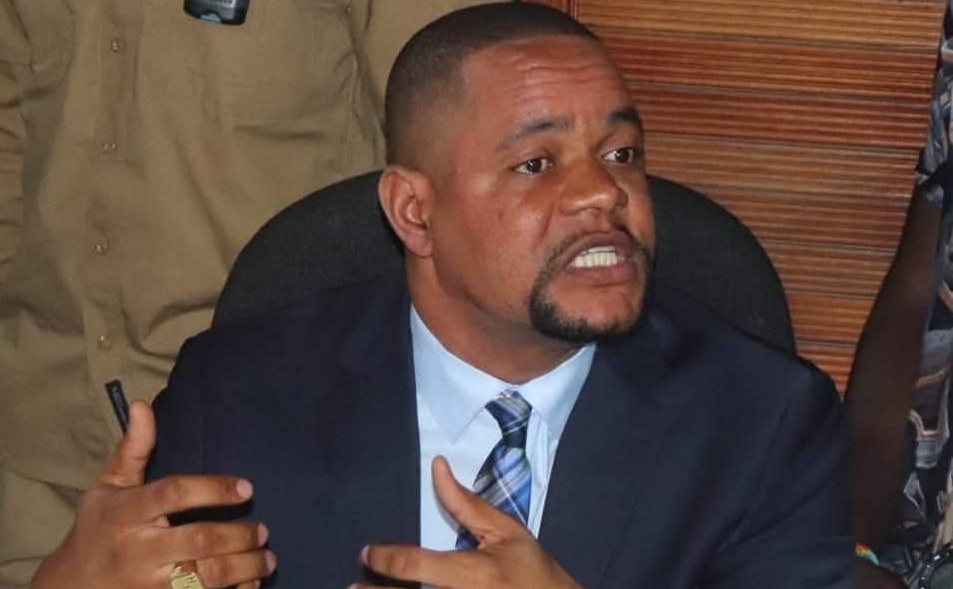
MONROVIA, LIBERIA – Henry Pedro Costa has sharply contrasted the former George Manneh Weah administration’s record on drug enforcement with the current government’s response to Liberia’s escalating narcotics crisis, arguing that the country’s latest string of major cocaine seizures reflects a stronger political will to confront international trafficking networks.
Appearing Saturday, August 23, 2026, on Spoon FM with host Stanton A. Witherspoon, Costa said the difference between the two administrations was not simply the amount of narcotics intercepted but the manner in which the government responded to the trafficking threat.
Costa alleged that international cartels became increasingly established in Liberia during the CDC government, claiming that criminal organizations were able to develop relationships that facilitated the movement of narcotics through the country.
“The cartels became very entrenched, very comfortable during the CDC time,” Costa said.
He alleged that trafficking networks cultivated relationships capable of facilitating the importation, transit and movement of their products through Liberia.
Costa’s assessment places the controversial US$100 million cocaine seizure of October 2022 at the center of the debate.
Liberian authorities seized approximately 520 kilograms of cocaine hidden in a frozen-goods container during the operation. The shipment was believed to have originated in Colombia and passed through Brazil before reaching Liberia. According to the U.S. Department of State’s narcotics report, American investigators provided the intelligence that led Liberian authorities to the shipment.
Costa argued that this foreign intelligence support is evidence that the breakthrough did not originate from the Liberian government’s own detection system.
“It was not the government that got this information,” he said.
According to Costa, the traffickers believed they could conceal the cocaine inside frozen-food containers without attracting attention. But U.S. investigators were already monitoring the shipment and passed information to Liberian authorities.
“That’s why I say it was accidental, because it was not them,” Costa said.
There is, however, an important distinction between Costa’s political interpretation and the documented facts surrounding the case.
The available official record confirms that U.S. investigators tipped off Liberian security agencies, but it does not establish that the seizure itself was accidental. Liberia’s Ministry of Justice described the operation as a coordinated and well-planned multinational law-enforcement operation involving several agencies and international partners.
The case also did not end with the seizure.
Several foreign nationals were arrested or pursued in connection with the shipment, while the cocaine was destroyed. The case later became the subject of continuing legal and political controversy, including questions surrounding the prosecution and treatment of defendants.
The controversy was compounded by another significant cocaine seizure at the Freeport of Monrovia in January 2023.
The LDEA reported that approximately 197 packages of cocaine, later valued at about US$37.8 million, were discovered after a warning concerning a container carrying frozen-food products. TRH Trading Corporation was reported to have alerted authorities to the suspicious shipment.
That second seizure meant Liberia had intercepted narcotics worth well over US$130 million in the space of several months during the final period of the Weah administration.
The developments exposed a troubling contradiction: while Liberia was demonstrating an ability to intercept enormous quantities of cocaine, the country was also becoming increasingly attractive to international trafficking networks seeking routes through West Africa.
A U.S. narcotics assessment published in the aftermath of the 2022 seizure noted that Liberia was being used as part of an expanding West African transshipment corridor. It also reported concerns over inadequate resources, corruption vulnerabilities and insufficient capacity in drug prevention and treatment.
Costa believes the central difference today is political determination.
He pointed to the Boakai administration’s handling of the 2026 cocaine cases, particularly the decision to investigate not only foreign suspects but also Liberian security personnel allegedly connected to the trafficking networks.
Liberia’s 2026 campaign began with the June seizure of approximately 237.6 kilograms of cocaine at Roberts International Airport. The government subsequently launched a joint investigation involving the LDEA, Liberia National Police, National Security Agency, airport security, customs authorities and other agencies.
Then came the much larger July operation in Duazon, where authorities recovered nearly four metric tons of cocaine.
Together, the two seizures amounted to approximately 4.2 metric tons valued at about US$336 million, making the operation the largest narcotics seizure in Liberia’s history. Authorities later destroyed the drugs, while investigations expanded to include senior police officials accused of involvement or suspected links to the trafficking operation.
Costa argues that the willingness to investigate officials and pursue the broader network demonstrates that the current government is treating drug trafficking as a national-security threat rather than simply a matter of individual arrests.
He praised President Joseph Boakai’s administration for what he called “significant” political will in confronting the problem.
“I think we’ve seen a significant amount of political will on the part of the administration to deal with this,” Costa said.
That assessment comes as the Boakai administration faces one of its most consequential security tests.
The government has promised that the investigation into the US$336 million cocaine seizure will not be compromised by political connections. The arrest and charging of former Vice President Jewel Howard-Taylor in a separate alleged transnational narcotics investigation has further intensified the political stakes, although authorities have said the cases must be allowed to proceed through the justice system.
Costa cautioned that even aggressive enforcement will not immediately eliminate the threat.
“The cartels will never stop trying,” he said, comparing the narcotics trade to crime generally, where criminal organizations adapt after arrests and seizures.
For Costa, however, the objective should not be to expect traffickers to voluntarily abandon Liberia. Instead, he argues, the government must make the country increasingly hostile to their operations by disrupting shipments, identifying local collaborators, following the money and prosecuting those who provide protection or logistical support.
“That makes me confident that we’re going to win against the cartels,” he said.
His comments have injected another political dimension into Liberia’s increasingly intense national debate over narcotics — a debate now focused not only on how much cocaine is being seized, but on whether successive governments have possessed the political will, intelligence capacity and institutional independence required to dismantle the criminal networks behind the shipments.
The record from the Weah years shows that major seizures did occur, including the historic 520-kilogram interception in 2022 and the subsequent January 2023 seizure. The current administration, meanwhile, has presided over even larger seizures and has expanded investigations into alleged local facilitators.
The unresolved question is whether Liberia can convert those seizures into lasting prosecutions and dismantle the networks that have repeatedly attempted to use the country as a transit point.
For Costa, that is ultimately the test of Liberia’s new anti-drug campaign.
See more Liberia News Network stories in Google Search by adding LNN as one of your Preferred Sources.
★ Add LNN as a Preferred Source