Published: September 14, 2026
Legal departments at commercial banks in Liberia maintain cabinets full of Judgments. Enforceable Judgments. Yet, balance sheets of banks reflect that the very judgment money contained in those pile of papers is still in the Non-Performing Loans column. The reason is simple: winning a Debt case in Liberian courts is only half the battle; the actual test is to navigate enforcement-bottlenecks and convert the judgment amount into cash on the balance sheet of the banks. This is grim.
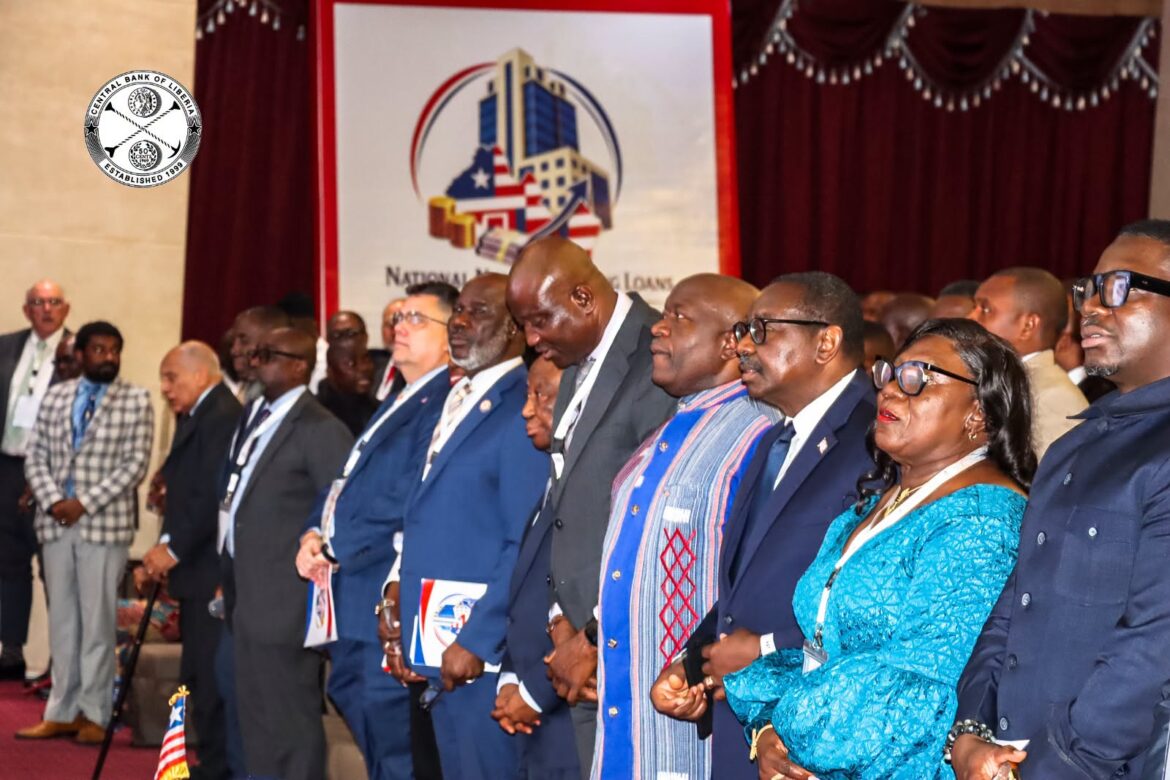
Recently, Central Bank of Liberia (CBL) released its statistics on the ratio of Non-Performing Loans, alarming that Liberia’s banking sector faces elevated levels of non-performing loans. Accordingly, CBL convened a three-day National Non-Performing Loans Conference (NPL) from 9-11 September to derive national consensus around a comprehensive reform agenda to drive down NPL ratio. Panelists and Delegates at the conference included regulators from the CBL, Bank Executives, and the business community, amongst others.
But as already alluded to in the opening paragraph, you cannot comfortably drive down NPL ratio in the absence of the law and Lawyers. Our imprints are all over the loan architecture. We start by drafting the Loan Agreements or the Restructured Agreement for distressed loans. When borrowers default, Lawyers step in to prosecute the default in the Commercial or Debt Courts. But perhaps most important of all, lawyers pursue enforcement proceedings after the judgment to ensure judgment is converted to cash. Hence, lawyers’ voices are indispensable in the NPL Conference discourse. The CBL recognizes this reality.
Accordingly, and rightfully so, one of the key themes at the just-ended NPL conference was Debt Recovery and the Insolvency legal framework in Liberia. The speakers and panelists in this thematic area included recognized names in the Liberian legal landscape. Her Honor Retired Chief Justice Sie-A-Nyene G. Yuoh. Former Attorney General and Commercial Law Professor, Cllr. Benedict F. Sannoh. Another panelist was Cllr. T. Negbalee Warner, Former Dean of the Louis Grimes School of Law.
I also attended the opening session of the NPL Conference. But beyond my presence, I also focus my practice on Commercial & Corporate law, and currently litigating some number of complex Bank Debt Recovery cases in the Commercial and Debt Courts of Liberia. Therefore, I know firsthand the bottlenecks and challenges of converting judgment to cash.
Consequently, I submit that discussions seeking reforms in the legal regime of Debt Recovery will be incomplete without delving into post-judgment Debt Recovery and Assets Attachment bottlenecks currently permeating the corridors of our enforcement regime. Converting judgment amount to cash on the books of the banks encounters several stumbles by the wayside, and if we can derive reforms to restrain these bottlenecks, the ratio of non-performing loans will see a decrease.
I will break it all down in the next paragraphs.
The Law versus the Reality:
After judgment comes enforcement. Under our Civil Procedure Law, upon rendition of an enforceable judgment and after the Bill of Costs is prepared and taxed, the Lawyer representing the Judgment Creditor applies for and obtains a Payment Order issued and served on the Judgment Debtor commanding the Judgment Debtor to immediately pay the Judgment amount through the Office of the Sheriff. In the event Judgment Debtor fails to pay as commanded, within a reasonable time thereafter, usually a few days, the Lawyer then applies for and obtains a Writ of Execution from the Court, directing the Sheriff to seize and liquidate the Judgment Debtor’s properties and assets to satisfy the judgment amount. This is the law on converting judgment to cash. A priori, this appears to be easy and straightforward. But this is exactly where the problem begins. The bottlenecks show up. The judgment gathers dust on the shelf. The Bank has an enforceable judgment, but one that still means zero money on the balance sheet. Banks face debt recovery delays even after the Debt or Commercial Court has already ruled in their favor. The result? The bank holds a piece of paper, the debtor keeps the asset, the NPL ratio remains unchanged. This is the current reality on converting judgment to cash in our legal system.
So, where does the problem lie?
The challenges versus the control
Logistical challenges of Seizure and Attachment, Valuation Standards, Bank Accounts Attachment and Regulated Third-Party Auctioneers.
The logistical challenges of attachment: The Writ of Execution commands the Sheriff to seize and liquidate the Judgment Debtor’s properties and assets to satisfy the judgment amount. Let’s disregard immovable properties including real estate or such kind for a moment. Judgment Debtors may own such large physical and moveable assets against which courts may legally levy. But Our Court Sheriffs are under-resourced, and frequently lack such as vehicles, or towing equipment or such other logistics to aid in seizure of such large physical assets. And even if the Sheriffs are eventually successful at seizure, courts may not have sufficient storage infrastructure, capacity or security to effectively exercise physical control over such outsized physical assets until such time that it is liquidated. Without the assets being effectively seized and under the custody of the courts, Judgement Debtors may dispose of or dissipate such assets thereby stalling enforcement and recovery proceedings. This challenge requires a practical solution.
An effective enforcement procedure will require zeroing-out the logistical challenges faced by Court Sheriffs in attachment and enforcement. This may directly lower non-performing loan problems by enhancing post-judgment debt recovery.
The challenge of valuation: This is where it gets interesting. One of the speakers on day one of the NPL advocated for the need to insert professional liability clauses in valuations supplied by appraising companies. He argued that far too often, borrowers supply appraisals containing over-valued assets. He argued that mitigating this risk requires that appraisals contain clauses whereby appraising companies bind themselves to the veracity of their reports. While his argument relates to pre-loan situations, it speaks to a systemic problem. Standards
In the context of post-judgment enforcement and attachment proceedings, a clear and standardized valuation process enhances the public auction process of seized-assets ensuring that suitable value is recovered during foreclosure or disposition of seized-assets. That is one. The second prong is that we must also transition from traditional Sheriff Sales to Regulated Third-Party Private Auctioneers.
Regulated Third-Party Private Auctioneers: Introducing a regime of Regulated Third-Party Private Auctioneers will enhance enforcement. Under our current Sheriff Sales process, public auctions are poorly advertised, often consisting of a Notice of Public Sales posted in the Courtyards. This leads to low-ball that fail to fetch the right amount. Recently, a colleague Attorney pointed out to me that a Court Sheriff Sale fetched only about US$10,000 from an asset that could possibly have fetched far more. A Regulated Third-Party Private Auctioneers scheme will not only fetch higher recovery values for judgment debtors, but may also increase transparency in the process.
But the courts must first delegate the marketing and sale of seized assets to such licensed private auctioneers. There is a legal question here. Whether or not the Courts can legally delegate marketing and liquidation of seized assets to Third-Party private auctioneer firms? I answer this question in the affirmative. Article 75 of the Liberian Constitution empowers the Supreme Court to make such rules of courts and such procedures and manners by which cases are adjudicated. Enforcement is an inherent part of the adjudication process hence the Supreme Court may issue such operational rules as would allow a Sheriff of Court, upon receipt of the Writ of Execution, to contract an approved and authorized Third-Party Private Auctioneer to conduct the actual liquidation process. We are not replacing the Sheriff, as doing so will require legislative action. It is the commercial and marketing aspect of the liquidation process that we propose is handled by such private auctioneer, aiding to lower Non-Performing Loan in Liberia.
Bank Accounts Attachment: Service of an Attachment or Garnishment Writ upon a bank triggers a lien on the debtor’s liquid assets with such bank, if any. However, service of a Writ on one bank will not trigger obligation on other banks not specifically named and served in the Writ. Notice is cardinal in our jurisdiction, and proper service is a cornerstone of the Notice principle.
Where a Writ is served on one bank and the Returns reveals that no money was found in such account to be levied against, the lawyer then applies or requests service of an appropriate Writ on the next bank, and the cycle goes on. This process requiring application for and service on multiplicity of banks increases the wait time until judgment is converted to cash, should the Writ eventually finds its way to a bank holding money for the Judgment Debtor. Without this paper pointing out, readers can already suggest the answer to combat this cumbersome and cumbrous system. Centralized system is the way forward.
The Centralized System. Under this regime, upon obtaining such appropriate Writ and service on the Central Bank of Liberia, said service shall constitute service and notice of levy against any and all accounts of the Judgment Debtor held with all commercial banks and money wallet operators duly licensed and authorized by the CBL to operate in Liberia. Simply put, upon receipt of such appropriate Writ, the CBL simply executes a system-wide and legally supported distribution to all licensed commercial banks and mobile wallets operators with the same effect to comply with the orders contained in the Writ and provide such information to the emanating Court as though specifically served upon each single one of them. The legal regime necessary to effectuate this centralized system is that licensed commercial banks and money wallet operators shall be required to execute such instrument expressly naming the CBL as Agent for purposes of service of such Writs. This is a very practical process, instantly bypassing the current cumbersome state of affairs.
Conclusion and call to action:
The increasing rate of Non-Performing Loans has alarmed the Central Bank, and the just-ended NPL Conference was intended to find solution to alleviate this problem. Judgment debt that is not converted to cash significantly drives up the ratio of NPLs for our commercial banks, as a judgment debt is only really equal to the judgment amount that is eventually recovered. We can alleviate this problem by adopting practical and targeted reforms to accelerate recovery beyond judgment. Our economy has come of age over the last few years, hence it is time that our enforcement mechanisms tag along by evolving our procedures and its attenuating infrastructure. This paper has highlighted practical reforms that may go a long way in our efforts to tackle the rising Non-Performing Loans problem in Liberia. The NPL Conference could not have come at a better time.
See more Liberia News Network stories in Google Search by adding LNN as one of your Preferred Sources.
★ Add LNN as a Preferred Source