
By Socrates Smythe Saywon | Smart News Liberia
Every Independence Day tells a story about the state of a nation.
Some years, the story is one of hope and renewal. Other years, it reflects the challenges confronting a country. Liberia’s 179th Independence Day celebration in Buchanan, Grand Bassa County, was expected to be a moment of national pride, unity, and reflection.
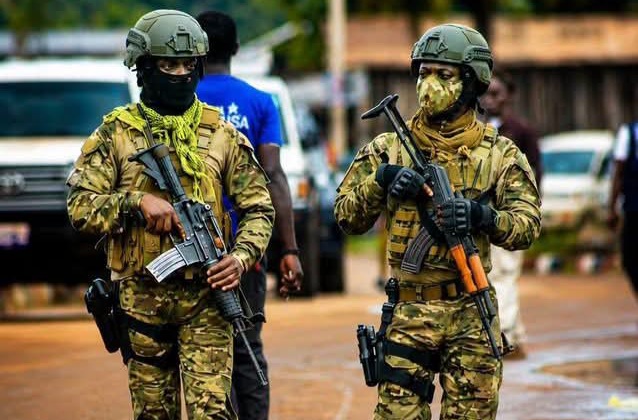
However, beyond the speeches, ceremonies, and celebrations, one image captured widespread public attention: Armed Forces of Liberia (AFL) soldiers dressed in military uniforms with their faces concealed by masks while providing security during the event.
For many Liberians, the appearance of masked soldiers at a major national gathering was unusual and raised immediate questions about the circumstances behind the security arrangement.
The issue is not whether President Joseph Nyuma Boakai should receive protection. Every head of state deserves adequate security, and ensuring the safety of national leaders is a fundamental responsibility of the state.
The real issue is public confidence and communication.
When security measures appear different from what citizens are accustomed to seeing, especially during a national celebration, people naturally seek explanations. In a democracy, those questions should not be viewed as attacks against the government or the security forces. They are legitimate concerns from citizens seeking clarity.
The public deserves to understand whether the deployment of masked AFL soldiers was part of a routine security operation, a new protective measure, or a response to a specific security assessment.
Was the decision based on intelligence received by Liberia’s security institutions?
Was it a precautionary measure following recent developments?
Or was it simply an operational decision taken by the Armed Forces of Liberia and other security agencies assigned to the event?
These questions require answers based on facts, not speculation.
The public reaction has already demonstrated how deeply the image has affected national conversation.
Former Montserrado County Representative Moses Acarous Gray described the development as concerning, writing that “this is concerning and Liberia is no more safe.”
Wade Williams also expressed alarm over the appearance of masked and heavily armed personnel, writing that “Liberia is headed for trouble” and questioning the security implications of such a display amid concerns about drug trafficking and national security.
While such comments represent individual opinions and do not establish the existence of a specific threat, they reflect a growing public demand for clarity from the government regarding the reasons behind the unusual security posture.
The timing of the security display has also contributed to public curiosity.
Days before the Independence Day celebration, a video circulated widely on social media claiming to have originated from an alleged transnational drug cartel. The video accused President Boakai, members of the First Family, and the Unity Party-led government of accepting millions of dollars in bribes to allow Liberia to serve as a transit route for international drug trafficking.
The video also reportedly demanded the release of cocaine allegedly valued at nearly US$1 billion and contained what appeared to be threats against Liberia’s sovereignty.
The Ministry of Justice responded by dismissing the allegations as false and malicious. It reaffirmed the government’s commitment to continuing the ongoing narcotics investigation without political interference.
It also disclosed that an internal investigation had been launched following allegations that money was offered in an attempt to influence the release of individuals in police custody.
The government’s response was necessary.
However, one important question remains. Was the heightened security posture at the Independence Day celebration connected to any assessed threat, or was it unrelated to recent national security concerns?
A clear explanation from the government would help address public concerns and prevent misinformation from taking root.
Liberia has experienced decades of political instability, conflict, and institutional mistrust. The country understands the dangers of uncertainty. When citizens do not receive timely and credible information, rumors often fill the gap.
This is why effective public communication matters.
No responsible citizen expects the Armed Forces of Liberia to disclose confidential security information, intelligence reports, or operational details that could compromise national safety. National security requires professionalism and discretion.
However, protecting sensitive information does not mean avoiding public accountability.
Governments around the world routinely explain changes in security arrangements while maintaining confidentiality on critical matters. Such communication strengthens trust between citizens and state institutions.
President Boakai has repeatedly emphasized accountability, transparency, and good governance as pillars of his administration. Those principles should also guide how the government communicates during moments of public concern.
The Independence Day celebration was designed to showcase Liberia’s unity, history, and national pride. Yet, the presence of masked AFL soldiers became one of the most discussed aspects of the event.
That should serve as a reminder that in a democracy, symbols matter.
Images involving state security institutions carry meaning. They can reassure citizens when properly explained, but they can also create uncertainty when left without context.
The Executive Mansion, the Ministry of National Defense, or the Armed Forces of Liberia should provide a clear explanation of the security arrangements surrounding the celebration. Such clarification would not weaken national security. Instead, it would demonstrate confidence in Liberia’s democratic institutions and respect for the public’s right to understand issues of national importance.
Liberia currently faces serious challenges, including economic hardship, unemployment, corruption concerns, and the growing threat of international drug trafficking. Addressing these issues requires not only strong institutions but also public trust.
Trust is strengthened when government communicates openly and responsibly.
It is weakened when silence allows speculation to dominate public discussion.
The appearance of masked AFL soldiers at President Boakai’s 179th Independence Day celebration may ultimately prove to have been a legitimate security precaution based on professional judgment.
If that is the case, explaining the general rationale should not be difficult.
The government owes citizens neither unnecessary alarm nor unnecessary secrecy. It owes them confidence, clarity, and credible communication.
At a time when Liberia needs unity and stability, protecting the Presidency must go together with protecting public trust.
On matters of national security, facts remain stronger than rumors, and transparency remains one of the strongest foundations of democracy.
