By Stephen G. Fellajuah
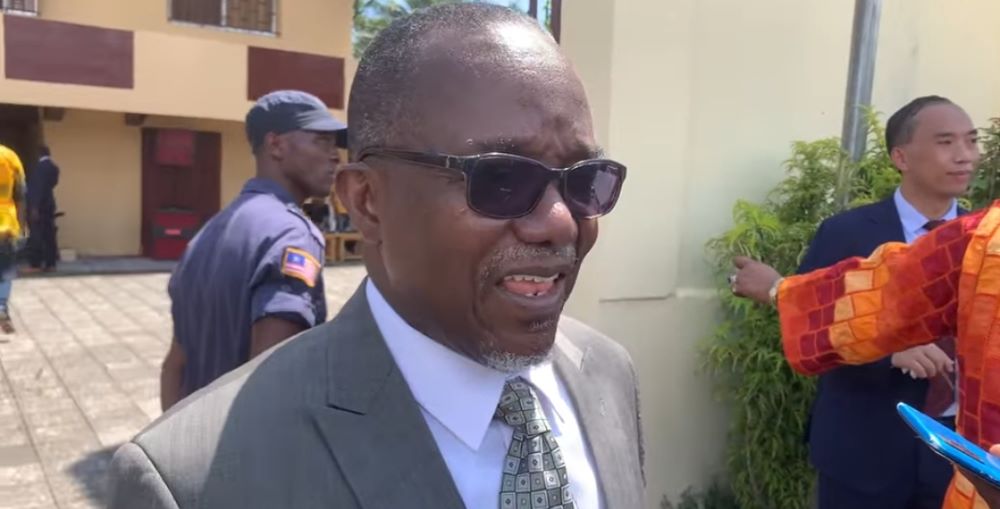
MONROVIA, Liberia, August 19, 2026: Former River Gee County Senator Conmany B. Wesseh has warned Liberians against taking the country’s 23 years of uninterrupted peace for granted, urging citizens, particularly young people, to reject violence and safeguard the gains made since the end of the civil war.
Wesseh also praised successive governments and Liberians for preserving the peace established under the Accra Comprehensive Peace Agreement (CPA), signed in 2003 to end years of armed conflict.
He spoke Tuesday, August 18, at the Federation of Liberian Youth (FLY) Peace and Legacy event in Monrovia, marking the 23rd anniversary of the peace agreement.
According to Wesseh, Liberia has reason to celebrate more than two decades of peace, noting that some countries emerging from prolonged civil conflicts have struggled to maintain stability for even five years.
“Today, we see Liberia celebrating 23 solid years because of the future of Liberia and the youth, who have decided to have all the debates and discussions without going to violence,” Wesseh said.
He urged young Liberians to strengthen the culture of peace and respect for the rule of law, stressing that political and social disagreements should be resolved through dialogue and legitimate democratic institutions rather than violence.
Wesseh warned that Liberia’s relative stability should not create complacency, emphasizing that maintaining peace requires continued commitment from citizens and political leaders.
The Accra Comprehensive Peace Agreement was signed on August 18, 2003, in Accra, Ghana, bringing an end to Liberia’s second civil war and establishing a framework for the country’s transition to democratic governance.
The agreement brought together representatives of the Government of Liberia, Liberians United for Reconciliation and Democracy (LURD), the Movement for Democracy in Liberia (MODEL), and political parties.
Peace negotiations were held in Ghana from June 4 to August 18, 2003, under the auspices of the Economic Community of West African States (ECOWAS).
Former Nigerian Head of State General Abdulsalami Abubakar served as mediator, while then-Ghanaian President John Agyekum Kufuor was chairman of ECOWAS.
From War to Peace
Liberia endured two civil wars that devastated the country, killed thousands of people and displaced large sections of the population.
The first civil war began in 1989 and ended in 1997 with elections that brought Charles Taylor to the presidency. Fighting resumed in 1999 as rebel forces challenged Taylor’s government, triggering another prolonged conflict.
By 2003, fighting had intensified as rebel forces advanced toward Monrovia, worsening an already severe humanitarian crisis.
International and regional efforts to end the conflict intensified, resulting in negotiations in Ghana. A ceasefire was signed on June 17, 2003, but fighting subsequently resumed.
Taylor eventually stepped down on August 11, 2003, handing power to Vice President Moses Blah before leaving for exile in Nigeria.
Seven days later, the warring parties and political stakeholders signed the Comprehensive Peace Agreement.
Road to Democratic Rule
The agreement provided for the establishment of a transitional government, disarmament, demobilization and reintegration of former combatants, security-sector reform, human-rights protection, reconciliation and economic reconstruction.
It also provided for the return and resettlement of refugees and internally displaced people and laid the groundwork for democratic elections.
The agreement led to the establishment of the National Transitional Government of Liberia (NTGL), headed by Chairman Gyude Bryant, which was inaugurated on October 14, 2003.
The United Nations Security Council subsequently established the United Nations Mission in Liberia (UNMIL), authorizing a major peacekeeping operation to support implementation of the peace agreement and Liberia’s transition.
The process eventually led to presidential and legislative elections in 2005 and the restoration of constitutional government.
Wesseh said that despite the important roles played by ECOWAS, the United Nations and other international partners, the long-term preservation of Liberia’s peace ultimately rests with Liberians.
He urged citizens to continue resolving political and social differences through dialogue, justice and respect for the rule of law rather than returning to violence.
See more Liberia News Network stories in Google Search by adding LNN as one of your Preferred Sources.
★ Add LNN as a Preferred Source