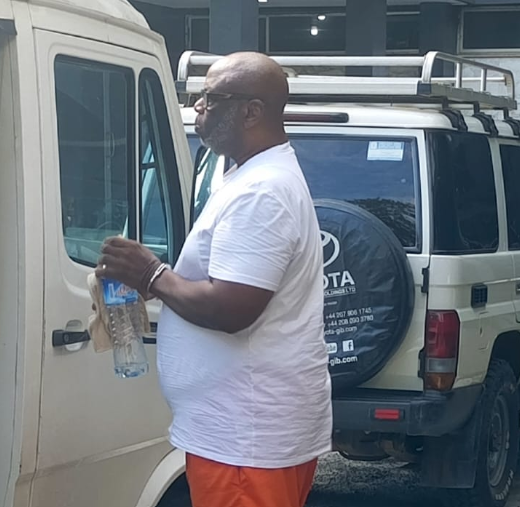
Judge Wesseh Says Prosecution Evidence Requires Defense Response as Statutory Rape Trial Moves Forward
Monrovia-Criminal Court “E” for Montserrado County has rejected a motion seeking the acquittal of 63-year-old Peter Bon Jallah, ruling that the prosecution’s evidence presented so far is not “wholly insufficient” to terminate the case before the defense has presented its evidence.
In a ruling delivered Wednesday, September 30, Assigned Circuit Judge Wesseh Alphonsus Wesseh, Sr. denied and dismissed Jallah’s Motion for Judgment of Acquittal, clearing the way for the defendant to take the witness stand as the trial enters a critical phase.
Jallah is facing charges growing out of allegations of Gang Rape, Statutory Rape and Kidnapping involving a 16-year-old male. He has denied the allegations and opted for a bench trial.
The ruling followed the prosecution’s presentation of 12 witnesses, including the alleged victim, police investigators, medical personnel and a Rwandan forensic expert who testified concerning DNA analysis.
The defense had argued that inconsistencies in the alleged victim’s account, questions surrounding an alleged crime scene on Camp Johnson Road, the absence of a woman the victim said he encountered there, medical evidence and the DNA findings created sufficient doubt to warrant an immediate acquittal.
But Judge Wesseh rejected the defense’s position at this stage of the proceedings.
‘Premature’ to End Trial
The court said granting the motion after the prosecution had rested would be premature, particularly because the prosecution had given notice that it could present rebuttal witnesses after the defense completes its case.
The judge emphasized that a judgment of acquittal may be granted where the evidence is “wholly insufficient” to establish guilt, citing the Supreme Court’s decision in Republic of Liberia v. Robert A. Smith, 25 LLR 207 (1976).
According to the ruling, however, the evidence already produced by the prosecution provides sufficient grounds for the court to hear the defense before determining the case.
The court also cited Potter v. Republic, 1 LLR 67, and Logan v. Republic, 33 LLR 434 (1985), in addressing the defense’s arguments concerning alleged defects and inconsistencies in the indictment.
Judge Wesseh said that if the defense believed the indictment was defective, it should have raised those objections through a motion to dismiss before trial.
Defense Attacks Crime Scene Evidence
A major component of the defense’s motion centered on the alleged Camp Johnson Road location where the alleged victim said he was taken and sexually abused.
The defense pointed to testimony from Police Officer Lindsey Gould, who reportedly told the court that investigators were unable to identify or locate the alleged crime scene.
The defense argued that the alleged victim’s testimony concerning the unidentified location should therefore be stricken from the record and that the uncertainty surrounding the location created reasonable doubt.
The court, however, declined to resolve the credibility and evidentiary disputes at the acquittal stage.
The defense also highlighted alleged differences between the victim’s testimony and the police charge sheet concerning the dates and locations of the alleged sexual encounters at Jallah’s Airfield residence.
Medical, DNA Evidence Challenged
The defense further attacked the prosecution’s medical and forensic evidence.
According to the ruling, defense lawyers argued that a medical nurse who testified about lacerations and bruises observed in the alleged victim’s anus did not conclusively state that the injuries were caused by rape.
The defense also relied on the testimony of the Rwandan forensic expert, arguing that the DNA examination could not establish penetration or independently classify the alleged offenses as statutory rape or gang rape.
The prosecution countered that it had established a prima facie case linking Jallah to the alleged crimes and urged the court to allow the trial to proceed.
Judge: Defense Must Now Respond
In a significant portion of the ruling, Judge Wesseh said the court could not properly determine the defendant’s guilt or innocence solely on the prosecution’s evidence without giving the defense an opportunity to present its case.
The court stated that the prosecution’s evidence contains the material elements requiring the defense to provide a response before the bench makes a final determination.
Judge Wesseh further referenced Allen Yancy v. Republic, 4 LLR (1935), stating that the surrounding circumstances of a criminal case should be placed before the fact-finder before a final decision is reached.
The court therefore ordered the trial to proceed “unhindered.”
Jallah Ordered to Take Witness Stand
Following the ruling, the court ordered that Jallah take the witness stand as the defense begins presenting its evidence.
One of Jallah’s lawyers immediately excepted to the ruling and announced that the defense would take advantage of the statute governing such exceptions.
The judge noted the exception as a matter of law.
The ruling leaves the central allegations against Jallah unresolved. The court has made clear that Wednesday’s decision was not a determination of guilt or innocence, but rather a decision that the evidence presented thus far does not justify ending the case before the defense is heard.
See more Liberia News Network stories in Google Search by adding LNN as one of your Preferred Sources.
★ Add LNN as a Preferred Source