
MFDP Says Shipping Fees, Customs Bottlenecks and Container Storage Charges Targeted in New Reform Package
MONROVIA – The Government of Liberia has announced a series of immediate relief measures and long-term reforms aimed at reducing the cost of doing business, easing congestion at the Freeport of Monrovia and improving cargo clearance, including plans to introduce 24-hour port operations as early as next week.
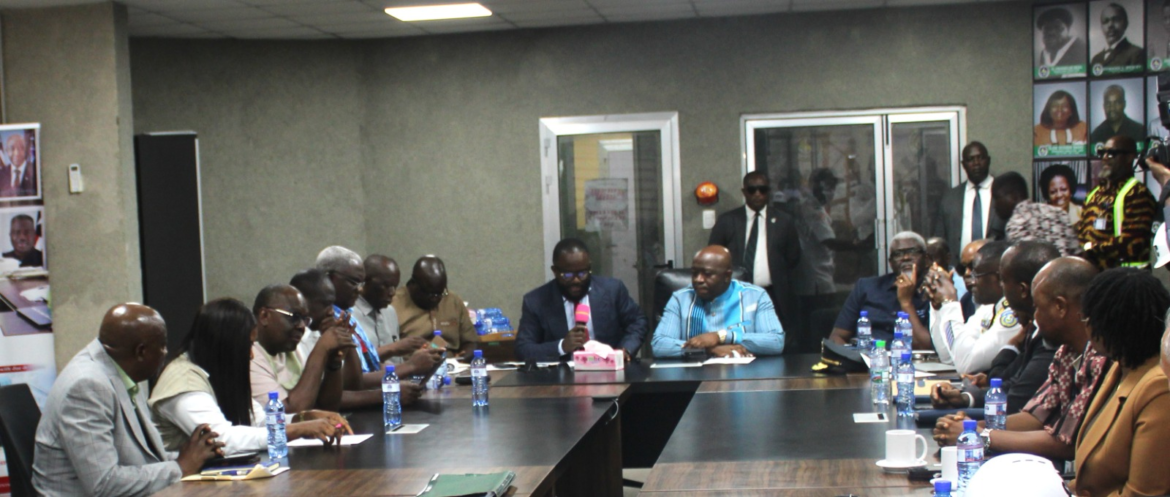
The measures, announced Monday, November 16, follow a high-level meeting of the Government’s Economic Management Team (EMT), National Security Council (NSC) and key port stakeholders at the Freeport of Monrovia. The meeting brought together government officials, shipping lines, importers, business representatives and other industry players to address persistent challenges affecting port operations and the movement of goods.
According to a press release issued by the Ministry of Finance and Development Planning (MFDP), the decisions are intended to reduce unnecessary charges, improve service delivery and ensure that the benefits of economic activity translate into lower costs for businesses and consumers.
Speaking at the meeting, Finance and Development Planning Minister Augustine Kpehe Ngafuan announced that shipping lines are expected to remove the Delivery Order Fee, following consultations with their respective principals, which are expected to be concluded within one week.
Minister Ngafuan also acknowledged concerns surrounding charges imposed on businesses, particularly those associated with customs and port-related services. He stressed that informal charges must stop and that all legitimate fees must be guided by transparent regulations and communicated to businesses before implementation.
On the proposed removal of the MSC-related surcharge, the Minister said the Government would engage relevant stakeholders, emphasizing that port charges should promote a competitive business environment rather than impose additional financial burdens on importers and consumers.
He further disclosed that the Liberia Revenue Authority (LRA) has committed to deploying additional personnel to address complaints from the business community, particularly those involving customs inspections and cargo clearance. The Government expects meaningful progress on the matter within 14 days.
As part of efforts to improve truck management and reduce operational difficulties within the port community, the Government also plans to support the establishment of a designated truck parking and servicing area around the old Bong Mines section of the port.
Government Targets 24-Hour Port Operations
A major component of the announced reforms is the Government’s renewed commitment to transitioning the Freeport of Monrovia to round-the-clock operations.
Minister Ngafuan said government agencies and private-sector operators would be required to coordinate their activities beyond conventional working hours, including nighttime and weekends, to ensure that all operational requirements are met.
He called on stakeholders across the port service chain to begin preparations for the transition, indicating that the necessary arrangements could be rolled out as early as next week.
The Minister said moving from a port system largely restricted to conventional working hours to a 24-hour operational model is critical to increasing productivity, reducing delays and lowering the cost of doing business.
Police Introduce Measures to Regulate Truck Movement
Meanwhile, Police Inspector General Gregory Coleman announced new measures to regulate the movement of trucks from the Freeport of Monrovia, with emphasis on roadworthiness, traffic management and public safety.
The measures are intended to strengthen coordination among the Liberia National Police, port authorities and transport operators to ensure safer and more orderly movement of cargo from the port.
Digital Customs Payments Begin January 2027
In another significant development, Customs Commissioner Saah Sarmoa announced plans by the Liberia Revenue Authority, in collaboration with the Central Bank of Liberia and commercial banks, to introduce a digital payment system supported by the National Switch.
The system will enable importers and clearing agents to make customs-related payments electronically, eliminating payment bottlenecks that have historically delayed cargo clearance and restricted the movement of goods.
According to Commissioner Sarmoa, the platform will facilitate payments around the clock, removing the limitations associated with conventional banking hours.
He disclosed that user acceptance testing has been completed, while customs brokers have already been briefed and consultations with commercial banks are ongoing.
The digital payment system is scheduled to become operational on January 1, 2027.
Commissioner Sarmoa explained that the January launch was deliberately selected to avoid disrupting port operations during December, traditionally a peak period for imports and commercial activities.
NPA Grants 30-Day Free Storage for Containers
For his part, National Port Authority (NPA) Managing Director Sekou Dukuly announced a temporary relief package for importers and businesses struggling with container storage charges.
Under the arrangement, containers that have remained at the port for up to one year will receive an additional 30-day period of free storage, covering charges under the NPA’s control.
The measure is intended to provide importers with additional time to clear their containers while reducing the financial burden associated with prolonged cargo delays.
Dukuly urged importers to take advantage of the relief period, warning that regular storage charges will resume after the 30-day window expires.
He also announced the suspension of certain vessel movement-related charges imposed on shipping lines, including the 30 percent and 100 percent charges associated with vessel movements and departures during the peak season.
The measure, according to the NPA, is intended to reduce operational costs and encourage more efficient vessel scheduling.
Additionally, the port authority is reviewing its tariff adjustment approach and engaging concessionaires and shipping lines to explore sustainable arrangements that balance port investments, operational costs and the need to maintain competitive charges.
Dukuly stressed that the Government expects port operators and shipping companies to cooperate with the ongoing reforms in the interest of businesses and the Liberian public.
Government Eyes Legal Reforms to Address Port Congestion
Beyond the immediate relief measures, the meeting also addressed structural challenges contributing to prolonged container stays and congestion at the Freeport of Monrovia.
Participants discussed the need to review existing laws governing the treatment and auctioning of abandoned or uncleared containers.
NPA Managing Director Dukuly said the current legal framework limits the authorities’ ability to efficiently dispose of containers left at the port for extended periods, thereby occupying valuable storage space and contributing to congestion.
He indicated that the Government intends to work with the Legislature to review the relevant legal provisions and introduce reforms that would improve port management, accelerate cargo turnover and free up storage capacity.
The discussions also highlighted the importance of strengthening pre-clearance procedures, improving coordination among importers, clearing agents and shipping lines, and ensuring the effective use of designated truck arrangements to speed up the movement of goods.
The Government reaffirmed that improving the efficiency of the Freeport of Monrovia remains central to its broader economic management agenda, particularly efforts to reduce the cost of imported goods, strengthen trade facilitation, improve revenue administration and create a more competitive investment climate.
However, the effectiveness of the announced measures will depend largely on their timely implementation and the willingness of government agencies, shipping companies and other port operators to comply with the proposed reforms.
For businesses and consumers who have long complained about high port charges, delays and the resulting cost of imported goods, the coming weeks will provide an important test of whether the Government’s commitments can translate into tangible relief.
See more Liberia News Network stories in Google Search by adding LNN as one of your Preferred Sources.
★ Add LNN as a Preferred Source