
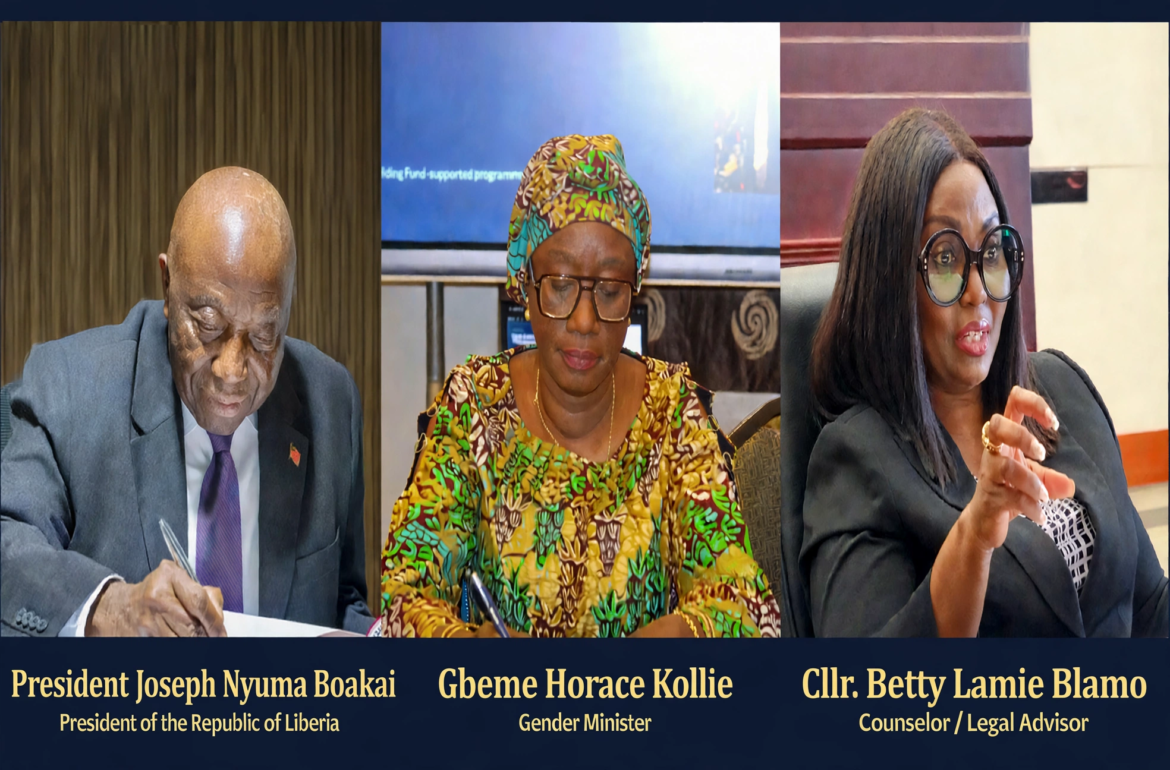
MONROVIA – More than two years after a 14-year-old girl was raped and made pregnant by a man who lived in her yard, the Liberian government has received an unusual warning from the bench: pay the survivor’s school fees, or face contempt of court.
Judge Wesseh Alphonsus Wesseh Sr., the assigned circuit judge of Criminal Court “E”, has rejected a request by the Ministry of Gender, Children and Social Protection to put off paying the survivor’s school costs until the 2027 budget year. He gave the ministry until November 30 to pay the fees and file the receipts with the court. Criminal Court “E” is Liberia’s special court for sexual and gender-based violence.
The ruling puts new pressure on President Joseph Nyuma Boakai’s government to show that it protects vulnerable children. It also raises a hard question: how can the state convict a man of abusing a child and then fail to help that child rebuild her life?
The Court Rejects the Budget Excuse
The court sent its directive on November 17 through Clerk of Court Abraham Richards. It came after a conference between the judge and government officials about what the state still owes the survivor and her baby.
The meeting followed a November 11 summons, also signed by Richards, that ordered two officials to appear on November 16 at 10:00 a.m.: Acting Minister of Justice and Attorney General Betty M. Lamin-Blamo and Gender Minister Gbeme Horace-Kollie. They were told to explain how the government was supporting the survivor and her child.
At the conference, representatives of the Gender Ministry reportedly said the government’s 2026 budget year was nearly over. Liberia’s budget year now follows the calendar year. They asked for time to meet the court’s order through the 2027 national budget.
Judge Wesseh refused. According to accounts of the meeting, he said the girl’s education could not wait because the government’s budget year was ending. He reportedly called the matter personal and serious, and asked the officials whether they would accept the same treatment if the girl were their own daughter or relative.
The written directive says the ministry must file payment receipts with the clerk of Criminal Court “E” to prove it has paid. If it misses the deadline, it may be held in contempt. Minister Horace-Kollie could then face further proceedings, subject to due process.
The receipt requirement matters. It means the court will judge compliance by proof of payment, not by promises or administrative explanations. The contempt warning also turns a routine dispute over government spending into a possible clash between the judiciary and the executive.
A Girl, a Knife and a Life Interrupted
The case began in October 2024 in Jallah’s Town, a community in Montserrado County, which includes the capital, Monrovia.
According to the indictment, Victor Eze, then 35, sexually assaulted a 14-year-old girl who lived in the same yard. Prosecutors said he entered the room where she was sleeping, threatened her with a knife and raped her. She was injured and taken to JDJ Memorial Hospital for examination and treatment.
Eze was arrested on December 9, 2024, and charged with statutory rape under Section 14.70 of Liberia’s New Penal Law. Under Liberia’s 2005 rape law, rape of a child under 18 is a first-degree felony that can carry up to life in prison.
On June 11, 2025, Eze pleaded guilty. When the court questioned him about the plea, he admitted that the girl had given birth to a child as a result of the abuse. He said he was willing to support the mother and child. The court found that his plea was voluntary and that he understood the charge, and convicted him.
On October 7, 2025, Judge Wesseh sentenced Eze to five years in prison, including the nine months he had already spent in pretrial detention. He must serve the remaining four years and three months in a Liberian prison.
The conviction held the offender to account. But the survivor’s ordeal did not end with the sentence. She is now a teenage mother, raising a child while trying to recover from the crime. She is reportedly still out of school, even though schools across Liberia have reopened.
Help That Fell Short
The question of support for the survivor and her child came up during the original trial. Court records mention US$50 paid through the Ministry of Justice’s Sexual and Gender-Based Violence Crimes Unit. The court also noted help from the Gender Ministry, including seed money for a small business and support through a program involving SOS Children’s Villages, an international child-welfare charity.
The new court order shows that this help has not covered her schooling. The issue is not whether the government did anything. It is whether what it did was enough, lasted long enough and met the court’s expectations and the child’s needs.
A small cash payment cannot replace an education. A small-business grant cannot replace schooling, counselling, healthcare and protection for a teenage mother and her baby. For a girl who was only 14 when she was attacked, school is more than a government benefit. It is her best chance to regain some normal life, become independent and avoid being trapped in poverty.
A Promise Put to the Test
The case is a test for the Boakai administration, which took office in January 2024. Boakai promised a government that would put human dignity, social protection and accountability first, and his administration has pledged to fight violence against women and children.
Sexual violence is a long-standing problem in Liberia, a West African nation of about 5.5 million people that is still rebuilding after civil wars that ended in 2003. Rape is among the most commonly reported serious crimes in the country, and many of the victims are children. In 2020, then-President George Manneh Weah declared rape a national emergency after a surge in reported cases.
The question now goes beyond whether Liberia can arrest, prosecute and jail offenders. It is whether the state keeps protecting the child after the sentence is handed down and public attention moves on.
The Gender Ministry’s legal mandate is to protect and promote the welfare of women, children and vulnerable people. Yet here it has had to explain to a court why a rape survivor’s school fees have not been paid. The ministry says the budget year is almost over, and that may describe a real administrative problem. But it does not meet the girl’s immediate needs. The school calendar does not wait for the next budget, and neither does the state’s duty to a child whose life has been upended by sexual violence.
The Ministry of Justice, which took part in the earlier proceedings and was also summoned, is under scrutiny too. By summoning both ministries, Judge Wesseh signalled that he sees the survivor’s welfare as a shared government responsibility, not one that agencies can pass back and forth.
When the Executive Must Answer to the Judiciary
The order also raises a wider governance issue. Under Liberia’s constitution, the courts exercise judicial power, and the executive must obey lawful court orders. A ministry cannot treat a court directive as optional advice.
That gives the judge’s warning significance beyond this one case. It shows that the courts are willing to hold government agencies to account when their actions, or failure to act, harm vulnerable citizens. Contempt proceedings against a sitting cabinet minister would be a serious step, and any such case would have to follow proper legal procedure and give the minister due process.
November 30: A Deadline for the Government
The immediate obligation is clear: the fees must be paid by November 30, 2026, and the receipts filed with Criminal Court “E”.
But the government’s commitment to the survivor and her child must go further than a single court order. A five-year sentence may punish the offender, but it cannot send the survivor back to school or provide for her child. The state’s duty should be measured not only by how long the offender spends in prison, but by whether the survivor can return to class, get counselling and healthcare, and raise her child safely. That requires sustained government support.
For a girl whose childhood was cut short by sexual violence, justice cannot end with the conviction of the man who attacked her. A government that promises to protect its children cannot abandon them once the courtroom doors close.
See more Liberia News Network stories in Google Search by adding LNN as one of your Preferred Sources.
★ Add LNN as a Preferred Source