
LONDON, UNITED KINGDOM – A deeply moving tribute to seafarers killed amid the ongoing Middle East crisis has brought renewed attention to the human cost of maritime conflict, with Liberia calling for greater protection of civilian mariners who risk their lives transporting essential goods across international waters.
The tribute, authored by Liberia’s Permanent Representative to the International Maritime Organization (IMO), Ambassador Robert Wilmot Kpadeh, memorializes sailors who departed their homes expecting to return but instead lost their lives in circumstances that have transformed commercial shipping routes into dangerous passages.
Titled “Tribute to Fallen Seafarers – In Memory of Those Who Never Returned Home,” the literary piece places the human tragedy of maritime attacks at the center of its message, moving beyond ships, cargo, and international trade to the families, communities, and loved ones left behind.
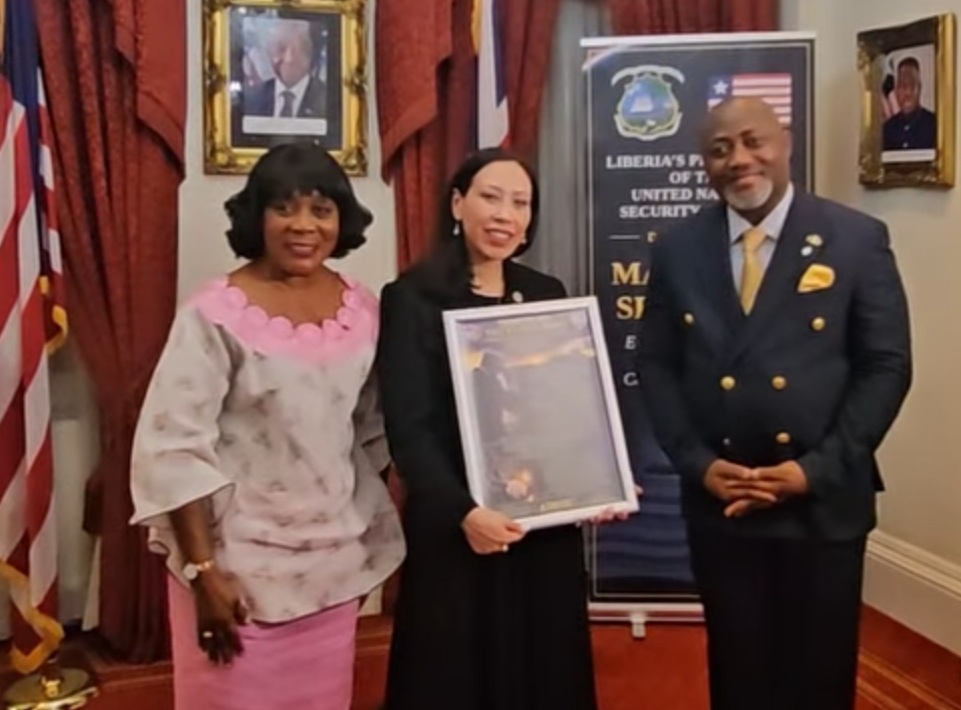
The tribute was formally presented to the IMO by Liberia’s Ambassador to the United Kingdom, Her Excellency Genevieve A. Kennedy, during a special diplomatic ceremony at the Liberian Embassy in London organized to highlight Liberia’s preparedness to assume the Presidency of the United Nations Security Council.
In a solemn opening, Ambassador Kpadeh writes, “Today, the sea is quiet,” describing a moment of silence for men and women who sailed in service to humanity but never made it home.
The tribute recounts the devastating realities confronting seafarers caught in the dangers of armed conflict, including rocket attacks, drones, and projectiles striking commercial vessels. Through evocative language, it portrays the fear, uncertainty, and sudden loss experienced by mariners who find themselves caught in violence far removed from the ordinary responsibilities of their profession.
Kpadeh’s words shift attention to the families enduring the pain of disappearance and death, describing mothers waiting, children asking when their fathers will return, and wives listening for footsteps that will never again cross their doorways.
The emotional weight of the tribute lies in its recognition that maritime casualties are not merely statistics recorded in security reports or shipping databases. Behind every fallen seafarer is a family whose life has been permanently changed, a community mourning a loved one, and colleagues who must continue sailing with the memories of those lost.
The author underscores the distinction between commercial mariners and combatants, emphasizing that seafarers are civilians performing duties essential to international trade and the movement of necessities across the world. They carry food, fuel, medicine, machinery, and other supplies that sustain economies and communities, yet increasingly face dangers arising from conflicts they did not create and have no part in fighting.
The tribute delivers an uncompromising message that attacks against civilian maritime personnel and commercial shipping must not be normalized. It calls for maritime law to be respected, freedom of navigation to be upheld, and civilian ships and their crews to be protected against the dangers of war.
“Merchant ships are not warships,” Kpadeh writes, reinforcing the principle that commercial vessels should not become targets of armed violence and that the safety of civilian mariners must remain a priority for the international community.
The IMO received the tribute with profound appreciation, describing it as a “powerful and befitting tribute” and pledging to place it in a prominent location where representatives of Member States could view and reflect upon its message.
That commitment to display the tribute publicly is expected to give the memorial a lasting presence within the international maritime community, serving as a reminder of the lives lost and the obligations nations have toward protecting seafarers operating across the world’s oceans.
The presentation in London also carries significance as Liberia prepares for its upcoming Presidency of the UN Security Council, placing the country’s call for civilian protection and respect for international law within a wider diplomatic engagement on global peace and security.
Ambassador Kpadeh’s tribute closes with a message of remembrance and hope for those who died while keeping the world connected through maritime transportation, honoring their service and the ultimate sacrifice they made.
“Fair winds, brave souls. Following seas. And eternal safe harbor,” the tribute concludes, offering a final farewell to seafarers whose journeys ended far from home.
The solemn message is a reminder that global commerce depends not only on ships, ports, and cargo but also on the lives of the men and women who sail them, and that their protection, dignity, and safety must never be treated as secondary to the movement of trade.
See more Liberia News Network stories in Google Search by adding LNN as one of your Preferred Sources.
★ Add LNN as a Preferred Source