n
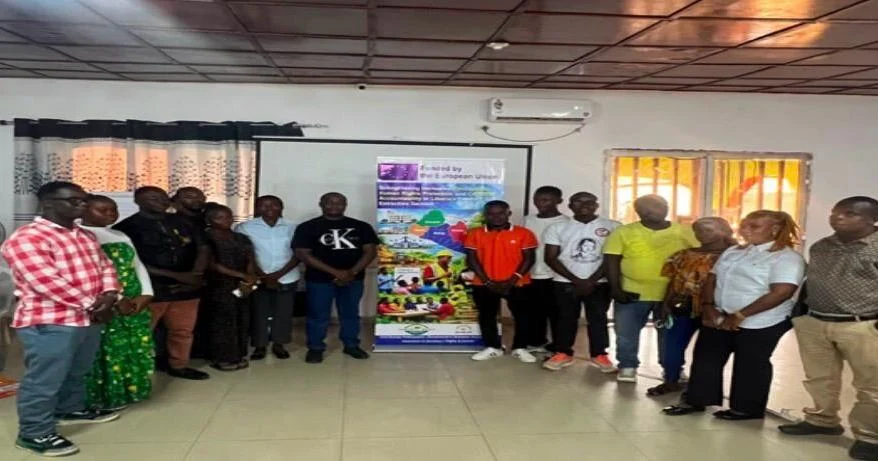
With Liberia’s extractive sector continuing to shape access to land, natural resources and community livelihoods, Integrity Watch Liberia (IWL) has trained about 20 journalists to dig deeper into corporate finances, ownership structures, concession agreements and business practices that could affect public interests and community rights.
The three-day training, organized by Integrity Watch Liberia (IWL) from September 23–25 in Ganta, focused on equipping journalists with practical skills to produce evidence-based, public-interest investigations into the activities of businesses, government institutions and extractive companies.
The training covered key areas including identifying investigative leads, conducting research, gathering and verifying evidence, analyzing corporate and financial information, and developing credible investigative stories.
Participants were also trained to research companies and corporate ownership structures, investigate beneficial ownership, locate and analyze public records, and examine contracts, concession agreements and other documents relevant to business and extractive-sector reporting.
The training featured two external facilitators, James Gaihyue of The Daylight and Leenart Dodoo of The Liberian Investigative Newspaper, who guided participants through practical approaches to investigative journalism.
According to Lawrence Javis Wilson, Program Assistant, a major focus of the training was extractive financing and the ability of journalists to examine financial information and follow financial flows within the sector.
“A major component of the training focused on extractive financing, equipping journalists with techniques for examining financial information and following financial flows within the extractive sector,” Wilson said.
“We expect participants to explore how financial and corporate records can be used to investigate issues involving companies and their activities,” he added.
Wilson said the training also placed emphasis on land rights and business-related human rights, particularly the effects of corporate and extractive activities on communities and individuals.
“The journalists are also able to examine land rights and business-related human rights issues, with emphasis on investigating the impact of business and extractive activities on communities and individuals,” he said.
Access to information was another major component of the training. Journalists were introduced to mechanisms for obtaining government records and other information needed to substantiate investigative reports, including freedom-of-information procedures.
The facilitators also addressed investigative interviewing techniques, responsible source management, digital research and verification, as well as the legal and ethical considerations associated with investigative reporting.
Journalist safety was also emphasized, with participants trained to identify and manage potential risks that may arise when pursuing sensitive investigations involving powerful individuals, companies or institutions.
Among the participating journalists were Franklin Doloquee of FrontPage Africa and Ishmael F. Menkor of the Daily Observer Newspaper, alongside other journalists from Nimba and Bong Counties.
Wilson said the training was designed to move beyond classroom discussions by requiring participants to apply investigative techniques to potential real-world stories.
“This training places serious emphasis on practical application, with participants guided to develop investigation questions, formulate hypotheses, identify evidence needed to support their findings, and develop reporting strategies for potential investigative stories,” he reiterated.
The approach is intended to help journalists move from conventional reporting toward deeper investigations that rely on documentary evidence, corporate records, financial information, interviews and independent verification.
The training comes amid growing public interest in how Liberia’s natural resources are managed and how extractive activities affect communities, landowners and the broader economy.
IWL said the programme forms part of its broader efforts to strengthen transparency, accountability and public awareness around business and human rights issues in Liberia, particularly in the land and extractive sectors.
Through the initiative, the organization seeks to strengthen journalists’ ability to produce credible, evidence-based reports on issues involving businesses, government institutions, communities, land governance, natural resources and human rights.
The organization believes stronger investigative journalism can contribute to greater public scrutiny of corporate activities and government decisions while giving communities more information about developments that directly affect their land, livelihoods and rights.
See more Liberia News Network stories in Google Search by adding LNN as one of your Preferred Sources.
★ Add LNN as a Preferred Source