MONROVIA, August 17, 2026— Fresh allegations that some commissioners of the Liberia Telecommunications Authority (LTA) acquired expensive vehicles and property are prompting renewed calls for an independent investigation into the wealth and asset declarations of officials at the regulatory agency.
The allegations center on whether assets reportedly acquired by some members of the LTA Board of Commissioners are consistent with their declared wealth and known lawful sources of income.
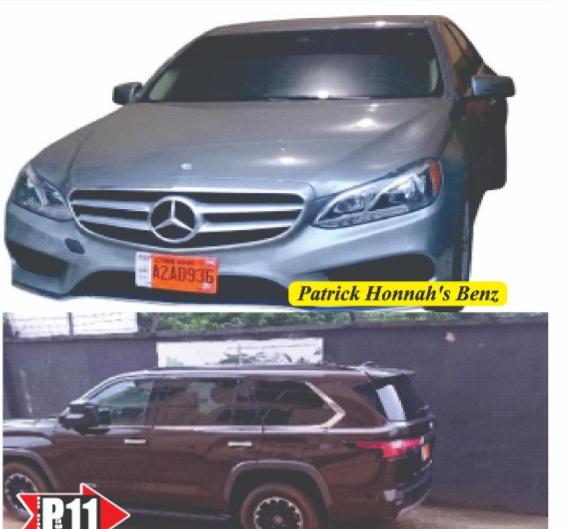
Commissioner Patrick R. Honnah is facing questions over a Mercedes-Benz reportedly valued at more than US$25,000, a BMW sport utility vehicle reportedly worth more than US$30,000, and a duplex whose ownership has become the subject of conflicting claims.
Commissioner Angela Cassell Bush has also faced questions over the reported acquisition of a vehicle allegedly valued at more than US$60,000.
The allegations do not constitute proof of wrongdoing, and no evidence has been presented establishing that the commissioners acquired the assets through illegal means. However, the claims have prompted calls for authorities to examine ownership documents, asset declarations, purchase records and the sources of funds used to acquire vehicles and property.
Honnah Rejects Claims
Honnah has rejected key aspects of the allegations and challenged journalists to independently verify the claims.
“The best propaganda is the truth,” Honnah said in comments responding to the allegations.
He invited a reporter to visit his residence and maintained that documentation relating to his vehicle would establish when and how it was acquired.
Honnah denied purchasing the Mercedes-Benz for US$25,000, saying he bought the vehicle for his wife for US$13,000. He acknowledged owning the BMW SUV but said he paid a relatively small amount for it, without disclosing the purchase price.
He also said the duplex at the center of the controversy was intended for his sister.
However, a woman identifying herself as Honnah’s sister later contacted the journalist from the United States and disputed aspects of the commissioner’s account regarding the property.
“That house is for me. Not for Patrick,” she reportedly said.
The statements leave questions surrounding the ownership and financing of the property that could be resolved through documentary evidence.
A senior LTA manager, meanwhile, defended the commissioners, pointing to their previous public service and professional careers as possible explanations for their financial capacity.
The manager noted that two commissioners previously served multiple terms in the Legislature and argued that Cassell Bush, who has held senior government positions, has the financial capacity to purchase the vehicle attributed to her.
But previous employment or public service alone does not establish how particular assets were financed, leaving the central question of whether the acquisitions are consistent with declared and legitimate sources of income.
The latest allegations come against a history of governance and corruption controversies at the telecommunications regulator.
Established under the Telecommunications Act of 2007, the LTA is governed by a five-member commission appointed by the President and confirmed by the Senate. It regulates Liberia’s telecommunications sector, including licensing, spectrum management and other areas critical to the country’s growing digital economy.
The institution came under scrutiny early in President Joseph Nyuma Boakai’s administration.
In April 2024, President Boakai suspended the then Board of Commissioners following allegations of questionable financial transactions and other alleged malpractices and instructed the General Auditing Commission (GAC) to conduct a comprehensive audit of the Authority.
The controversy later involved Abdullah L. Kamara, who subsequently served as Acting Chairman of the LTA.
President Boakai suspended Kamara in June 2025 following a GAC report concerning financial transactions involving TAMMA Corporation, where Kamara had previously served as chief executive officer. The matter was referred to the Liberia Anti-Corruption Commission (LACC) for investigation.
Kamara was subsequently prosecuted, but a jury later acquitted him of the corruption-related charges. Reports in June 2026 said the jury unanimously found him not guilty.
Despite the acquittal, Kamara has not returned to his former position at the LTA, prompting some employees and supporters to question whether he was treated fairly. Some have also alleged, without publicly presenting evidence, that individuals within the Commission worked to prevent his return.
Kamara’s case underscores the distinction between allegations, administrative action and criminal culpability. While officials may be suspended while allegations are investigated, criminal guilt must ultimately be established through the judicial process.
The LTA has faced other controversies involving procurement and financial management.
In November 2025, President Boakai suspended an LTA contract involving Telecom International Alliance (TIA) following findings by the GAC and LACC that reportedly raised concerns about the procurement process.
Against that background, calls are growing for the latest allegations involving sitting commissioners to be independently investigated rather than resolved through competing claims in the media.
Such an investigation could determine whether the vehicles and properties attributed to the commissioners are legally owned, properly declared and supported by legitimate sources of income, including salaries, previous earnings, investments, loans or other lawful financing.
If the assets were legitimately acquired and properly declared, documentary evidence could clear the commissioners of suspicion. Conversely, any evidence of undeclared assets, misuse of public resources or improper benefits would require action by the appropriate authorities.
The controversy comes as the Boakai administration continues to emphasize transparency and accountability in public institutions.
When President Boakai commissioned the current LTA Board in August 2025, he warned against corruption and tasked the commissioners with helping advance Liberia’s digital transformation and connectivity agenda.
The latest controversy is therefore emerging as another test of that commitment.
Some critics have called for the commissioners implicated in the allegations to be suspended pending investigation. Any such action, however, would have to comply with applicable law and due process and should not be interpreted as a determination of guilt.
The issue is not whether public officials are legally permitted to own expensive vehicles or property. Rather, the public-interest question is whether assets acquired while holding public office are properly declared and can be traced to legitimate and verifiable sources.
Given the LTA’s responsibility for regulating telecommunications, internet services, licensing, spectrum and other critical digital infrastructure, questions surrounding the integrity of its leadership could undermine confidence in the institution if left unresolved.
After years of controversies surrounding the Authority, an independent examination of the latest allegations could provide an opportunity to establish the facts and either clear the commissioners or provide a basis for further action.
For President Boakai’s administration, the controversy also presents a test of whether its accountability policy will be applied consistently to officials currently serving in government.
Ultimately, the question confronting the LTA extends beyond who owns a particular vehicle or property. It is whether Liberia’s telecommunications regulator can demonstrate that those entrusted with overseeing one of the country’s most important sectors are operating under standards of transparency and accountability capable of sustaining public confidence. – Edited by Othello B. Garblah
See more Liberia News Network stories in Google Search by adding LNN as one of your Preferred Sources.
★ Add LNN as a Preferred Source