Published: September 10, 2026
MONROVIA – More than US$100 million in Liberian bank credit is tied up in loans that are not being repaid, starving farmers, traders and small businesses of financing while banks sit on deposits they will not lend, according to documents prepared for a national conference that opened Wednesday.
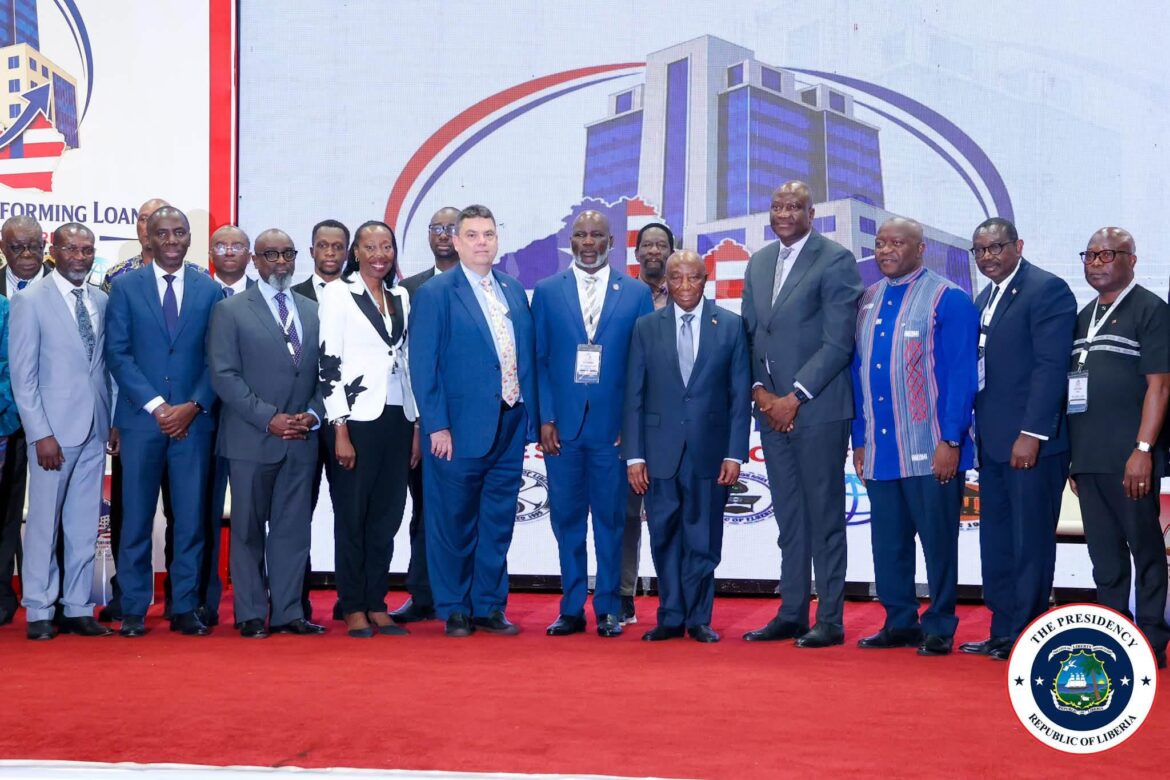
President Joseph Nyuma Boakai told bankers, lawmakers, judges and regulators at the opening of the three-day conference that the country cannot grow out of that freeze and that the cost falls on people, not institutions.
“It is about the Liberian farmer who needs financing to expand production. It is about the young entrepreneur with a good business idea but no access to capital,” Boakai said.
He said that when loans go unpaid, banks become cautious, credit becomes expensive and ordinary Liberians pay the price, and he tied the issue to his ARREST Agenda for Inclusive Development.
“The success of this conference will not be measured by the speeches we make or the recommendations we write. It will be measured by what we do after we leave this room… What our people need now is implementation,” he said.
Liberia’s system-wide non-performing loan ratio stood at 19.1% in December 2024, nearly twice the Central Bank of Liberia’s 10% regulatory threshold and close to four times the 5% international norm, according to the conference documents. Unaudited data show the ratio fell to about 12.87% by December 2025, but the documents attribute the decline to write-offs and restructuring rather than to borrowers resuming payment.
The squeeze on lending has deepened even as the ratio has fallen on paper. Private sector credit dropped to 10.1% of gross domestic product at the end of 2025 from 11.1% a year earlier, against a Sub-Saharan African average of 29.4%. Banks remain highly liquid, with loan-to-deposit ratios of about 35%.
Nearly 40% of Liberian businesses surveyed cited lack of access to finance as their biggest obstacle, up from 30% a decade ago, the World Bank said.
Finance Minister Augustine Kpehe Ngafuan said the government has itself fed the problem by delaying payments to vendors and contractors.
“When government does not pay the vendor, the vendor may not be able to pay the bank,” Ngafuan said. “Our message is simple: when this government contracts with you, government must pay you.”
He said the government budgeted nearly US$235 million for debt service this fiscal year and is paying more than 90% of it to restore its credibility, which he called an economic asset.
Central Bank of Liberia Executive Governor Henry F. Saamoi said the 19.1% ratio requires decisive action, and put Liberia’s figure alongside Ghana’s 21.8% in 2024, Nigeria’s 8.1%, Guinea’s 6.3% and Uganda’s 4.6%.
“No nation has successfully resolved a systemic NPL challenge through isolated action. Success requires partnership, coordination and commitment,” Saamoi said.
He said the conference has five goals: to build a shared understanding of what drives non-performing loans, assess regulatory, legal and judicial gaps, strengthen credit risk management, draw on regional and international experience, and produce a national resolution roadmap.
Boakai called for stronger credit reporting, improved land administration and collateral registration, digital financial services and a modern insolvency framework, and said delegates should leave with assigned responsibilities, timelines and a monitoring mechanism.
World Bank Country Manager Georgia Wallen set out four priorities: building an ecosystem of trust through better identification, credit reporting and a collateral registry; addressing discipline among both lenders and borrowers; recognizing and resolving distressed assets quickly; and linking financial stability to inclusive finance. She cited the launch last week of Liberia’s Enhanced Collateral Registry, a US$6 million LIFT Project line of credit that has reached 253 micro, small and medium-sized enterprises with no non-performing loans, and an US$81 million guarantee from the Multilateral Investment Guarantee Agency for Orange Liberia to expand mobile money.
U.S. Chargé d’Affaires Joe Zadrozny, drawing on the American savings and loan crisis of the 1980s, said “troubled assets do not simply disappear with time.”
“Do not leave with another diagnosis, leave with assignments. Who will modernize the credit information system and by when? What happens next Monday to move it forward?” he said.
The conference, held under the theme “Promoting Access to Finance to Support Private Sector Growth and Job Creation,” is sponsored by the government under the World Bank-financed LIFT Project, the Central Bank of Liberia and the financial sector. Organizers said it is expected to produce a national resolution policy roadmap and a time-bound reform action plan across five pillars: prudential strengthening, legal and judicial reform, credit infrastructure modernization, market development and borrower discipline.
The documents identify the underlying causes as weak underwriting, gaps in credit information, lengthy debt recovery and collateral enforcement, governance weaknesses, the absence of a distressed-asset market and poor repayment discipline.
See more Liberia News Network stories in Google Search by adding LNN as one of your Preferred Sources.
★ Add LNN as a Preferred Source